Airports Council Named One of Washington D.C.’s Best Places to Work in 2026

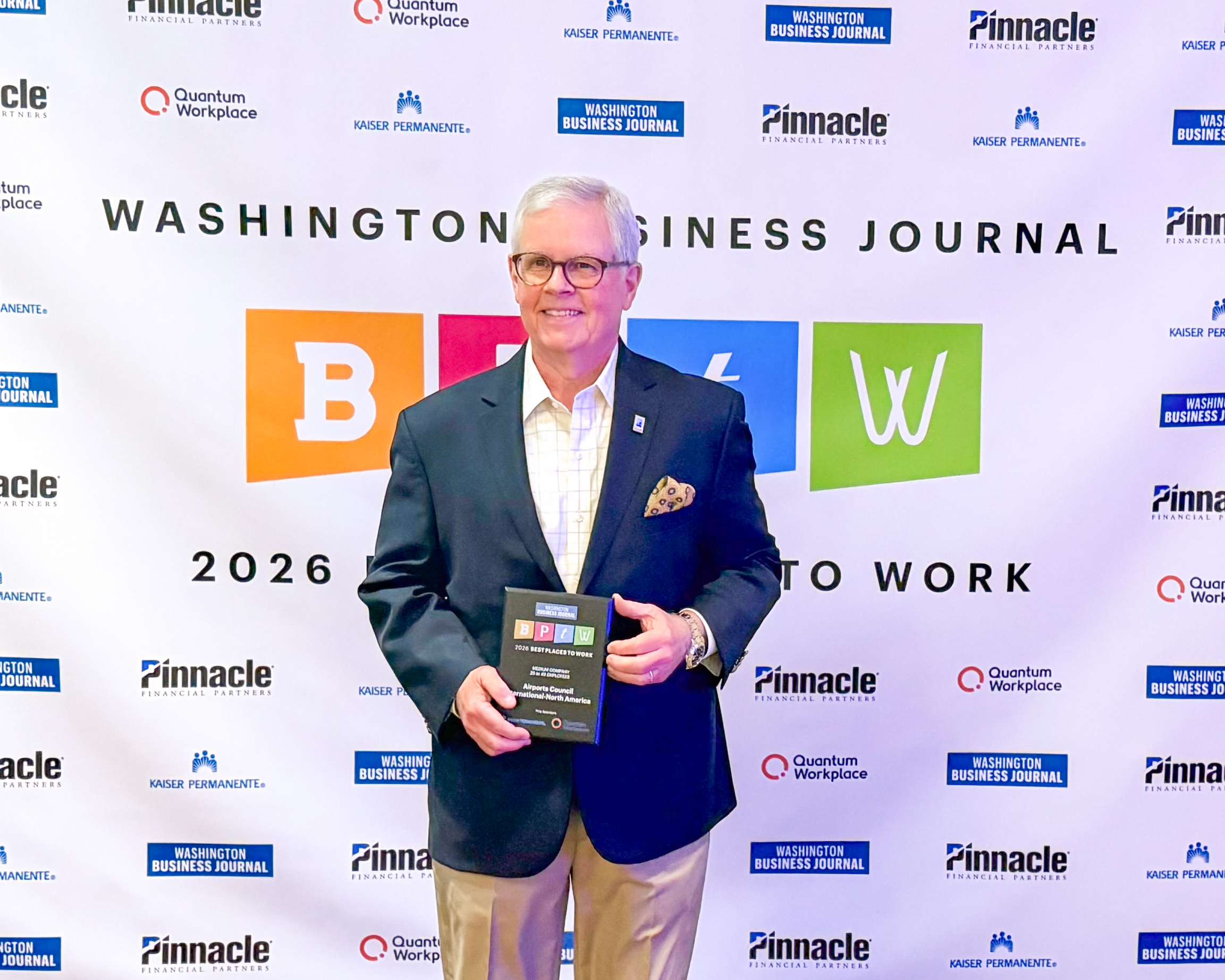
We’re thrilled to announce that ACI-NA has been recognized by Washington Business Journal as one of Washington D.C.’s Best Places to Work in 2026, an honor that belongs entirely to our incredible team.

Founded in 1948, ACI-NA has spent more than 75 years as the voice of commercial service airports across the United States and Canada. And while our mission has always been about connecting people and places, the culture we’ve built internally is just as important to us as the work we do for our members.

During an awards presentation on May 7, 2026, ACI-NA was named a Best Place to Work in the Washington, DC, metro area by Washington Business Journal.  ACI-NA President and CEO Kevin Burke accepted the award on behalf of the ACI-NA team.

“At the heart of ACI-NA is a commitment to shared and mutual respect for every voice, at every level,” Burke said. “I’m proud of our team and the culture we have built together. This recognition reflects not only the supportive and inclusive environment we strive to create for our staff, but also the passion and dedication our team brings to serving airports across North America every day.”

Building an innovative workplace culture starts at the top. Leadership maintains an open-door policy and stays genuinely engaged with staff, from rolling up their sleeves on tough challenges to checking in regularly with team members.

“When people feel empowered, connected, and invested in a shared mission, they do their best work,” Burke said.  “That translates directly into stronger advocacy, better collaboration, and more meaningful results for our members and the aviation industry as a whole.”

That dedication extends to the heart of everything we do: serving our members. ACI-NA is a member-focused organization, and the staff works closely with airport professionals and airport business partners across North America to ensure their priorities are heard and advanced. Much of that connection happens through a robust committee structure, where ACI-NA team members collaborate directly with airport professionals to shape industry policy, share best practices, and tackle the challenges facing airports today. Those relationships are the backbone of ACI-NA’s work.

Workforce development is also a core priority for ACI-NA, for both the airport industry and within the association itself. As part of ACI-NA’s strategic plan, the organization continues to invest in its people through professional development, mentorship, leadership opportunities, and a workplace culture designed to help employees grow and succeed. By fostering a strong internal workforce, ACI-NA is better positioned to help airports across North America address one of the industry’s most pressing long-term challenges: building and sustaining the workforce of the future.

ACI-NA strengthens its internal culture with meaningful benefits. Employees enjoy a hybrid work schedule, tuition reimbursement, and support for professional development through outside organizations and networking groups. And because ACI-NA’s mission is rooted in global aviation, the team truly lives it, representing U.S. and Canadian airport interests around the globe.  At any given time, staff might find themselves in Hong Kong, Amsterdam, London, Berlin, and beyond, to advance airport priorities.

Each year, our team comes together for the largest gathering of airport professionals in the world, an all-hands event that takes a full year to plan and represents the culmination of our collective work. It’s a chance to connect with members, hear from thought leaders, and set the agenda for the future of aviation. Events like this are only possible because of a team that is, in three words: inclusive, passionate, and collaborative.

We’re deeply proud of this recognition and grateful to every member of the ACI-NA team who makes this such a special place to work. Here’s to many more years of doing meaningful work together.

ACI-NA Participates in DOT Modern Skies Summit

By Chris Oswald, Senior Vice President, Safety and Regulatory Affairs

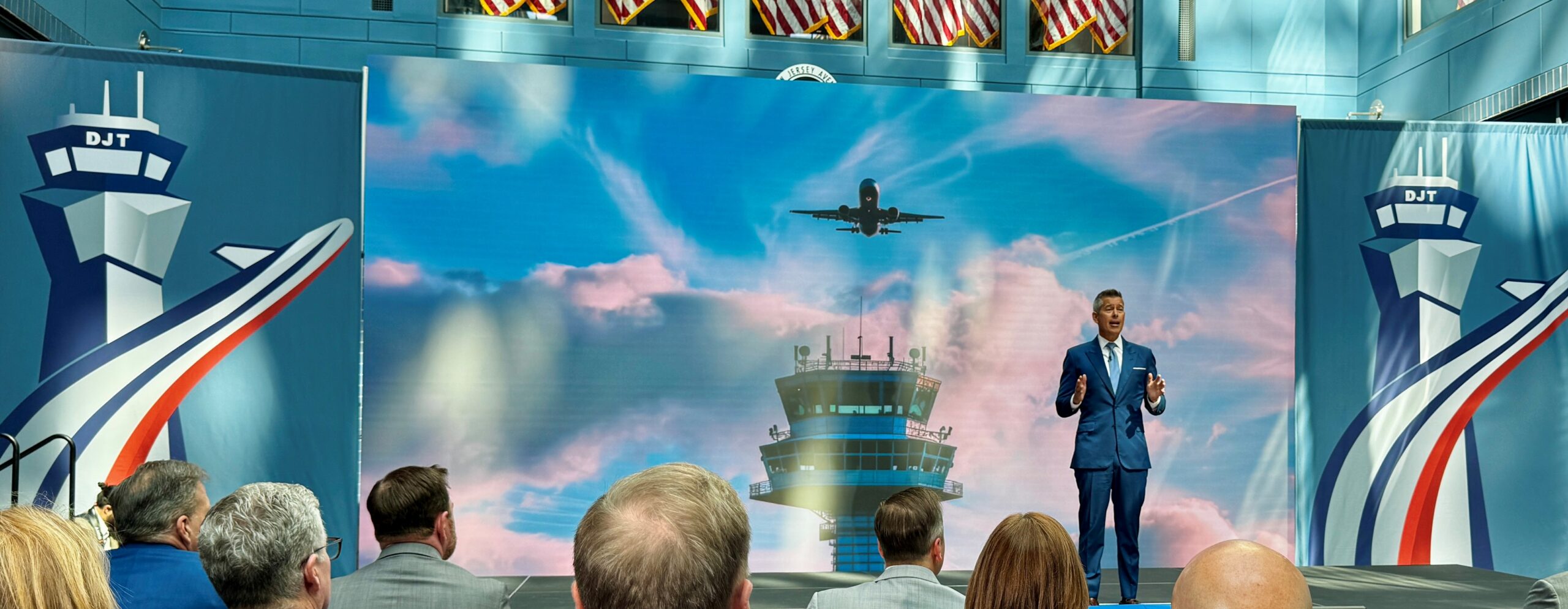
On April 21, 2026, U.S. Secretary of Transportation Secretary Sean Duffy and FAA Administrator Bryan Bedford hosted the Modern Skies Summit to showcase progress and plans for FAA’s Brand New Air Traffic Control System (BNATCS) airspace modernization program. In keynote remarks opening the event, Secretary Duffy reviewed the underlying need for and goals of BNATCS. He stressed that the initial $12.5 billion provided for the program through last year’s One Big Beautiful Bill Act (H.R. 1) has enabled investments in reliable, modern digital technologies and capabilities. These aim to address chronic air traffic control (ATC) system issues, from communications disruptions that affected operations in the New York TRACON last year to electronic component failures that necessitated the evacuation of the Potomac TRACON several weeks ago.

Industry played a prominent role in the Summit with Airlines for America president and CEO, Chris Sununu, speaking on behalf of stakeholders of the Modern Skies Coalition, of which ACI-NA is part. Speakers throughout the Summit reiterated the critical role of all industry partners engaging in the BNATCS program to ensure safe operations while transitioning to new systems.

Secretary Duffy and FAA’s Acting Chief Technology Officer, Rebecca Guy, provided additional details about key technologies that are being deployed under BNATCS.

  • Replacement of aging copper communications lines with fiber optic lines
  • Upgrades to and replacement of key ATC communications infrastructure, including radios and voice switches
  • Replacement of aging airport surveillance and surface surveillance radar systems with modern equivalents
  • Expansion and expedited deployment of the Terminal Flight Data Manager (TFDM) system, which enables controllers to transition from paper flight strips to digital flight strips, providing more robust and dynamic air traffic management capabilities
  • Improvement of communications and weather information systems available to pilots and air traffic controllers in Alaska

Guy was joined by Justin Ciaccio, president of the National Aerospace Solutions Sector at Peraton, the contractor selected in December 2025 to lead BNATCS implementation as the program’s prime integrator. Both Guy and Ciaccio underscored the need to deliver these capabilities by the end of 2028.

FAA Administrator Bedford discussed the need to develop and implement air traffic management automation capabilities that require funding beyond the currently appropriated $12.5 billion. Bedford said FAA needs to work on optimizing aircraft trajectories at a national scale in real time to facilitate safer, more efficient air traffic management within the U.S. National Airspace System (NAS).

ACI-NA continues to engage with DOT and FAA on BNATCS, especially to ensure the perspective of airport operators is considered as decisions are made. Airports are grateful to DOT and FAA leaders for continuing to recognize the role of the industry in this critical program.

Phoenix Sky Harbor Launches Enhanced Passenger Processing for International Arrivals

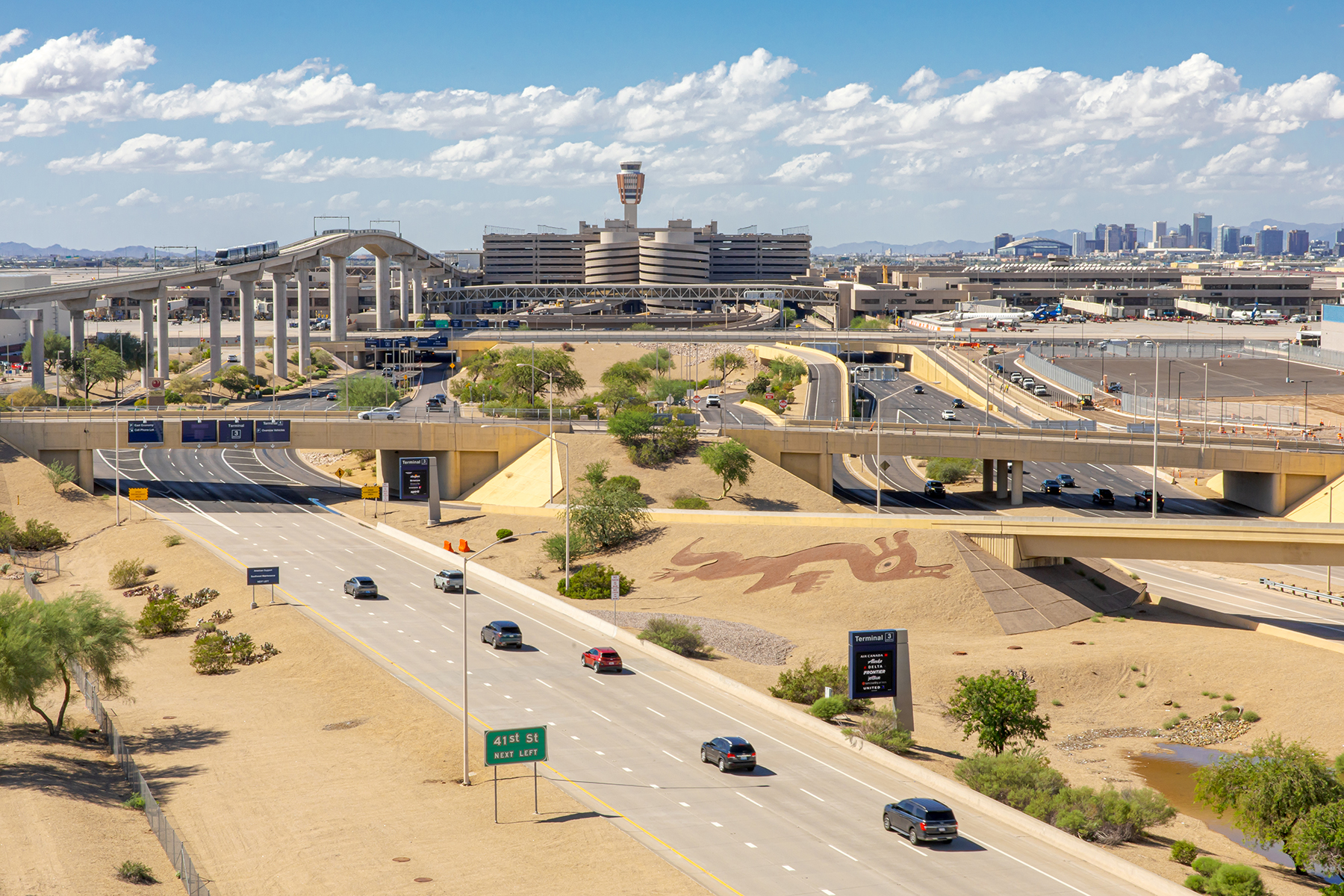
Phoenix Sky Harbor International Airport is continuing to streamline the passenger experience with the launch of Enhanced Passenger Processing, a new initiative designed to help eligible travelers move through customs more quickly and efficiently. 

Introduced in partnership with U.S. Customs and Border Protection (CBP), the program gives U.S. citizens arriving on international flights a faster, touchless option in the customs inspection area. Phoenix Sky Harbor is the 23rd airport in the country to offer the free service, adding another convenience-focused tool to the airport’s broader passenger experience strategy. 

A Faster Way Through Customs 

Enhanced Passenger Processing is a voluntary program for U.S. citizens, and no pre-enrollment is required. Travelers who choose to participate simply arrive at the CBP inspection area, where a camera captures their image and matches it to the document information already on file with the agency. 

The process takes only seconds to complete. By streamlining a key step in the international arrivals experience, the program helps travelers move more quickly through customs while supporting a secure and efficient inspection process. It also allows CBP officers to focus more directly on travelers and the inspections. 

“This initiative is the result of the strong collaboration between our Technology and Operations teams, the airlines, and CBP,” said Aviation Director Chad Makovsky. “Phoenix Sky Harbor continues to grow its international travel market, and this exceptional new program is yet another way we reinforce our brand of being America’s Friendliest Airport.” 

Collaboration and Operational Impact 

Like many successful airport initiatives, Enhanced Passenger Processing reflects close coordination among airport teams, airline partners, and federal agencies. Implementing new technology in international arrivals and customs requires the right infrastructure and strong collaboration across operational, technological, and regulatory partners.  

For Phoenix Sky Harbor, the launch of the program also supports the airport’s continued focus on improving the overall passenger experience. It is one of several services the airport offers to reduce friction and improve convenience throughout the travel journey. 

Other options include TSA PreCheck Touchless IDCLEAR+ eGates, PHX Reserve, biometric exit for international departures, and Early Bag Check for select domestic travelers. Together, these services reflect the airport’s broader effort to create a smoother, more efficient experience from arrival to departure. 

Part of the Broader Industry Focus on the Passenger Experience 

Across the industry, airports are continuing to look for practical ways to streamline the customer experience at every stage of the journey. That includes reducing wait times, expanding self-service options, and using technology to make travel more predictable and convenient. 

Programs like Enhanced Passenger Processing reflect that broader shift. Airports are increasingly taking a more connected approach to the passenger journey, identifying opportunities to improve efficiency, strengthen service, and reduce friction from curb to gate and beyond. 

For Phoenix Sky Harbor, Enhanced Passenger Processing is one example of how airports are putting that approach into practice. By investing in tools that improve both convenience and operations, airports can better support a seamless, customer-focused travel experience. 

Busiest Air Travel Year in 15 Years Puts Airport Investment in Focus

By Ryan Madsen, Communications Manager, ACI-NA

Air travel in the United States reached a major milestone in 2025, reinforcing how essential airports are to the nation’s economy and daily life. According to newly released data from the Federal Aviation Administration, the agency managed 17.2 million flights last year, making 2025 the busiest for air travel in more than 15 years. 

That figure reflects a steady climb following the sharp downturn in 2020, surpassing the previous high of 17 million flights recorded in 2019. For travelers, it means busier terminals, more flights, and growing connectivity. For airports, it means infrastructure that is being pushed harder and more often than it was originally designed to handle. 

As passenger and flight volumes rise, airports face increasing pressure on runways, terminals, baggage systems, curbside facilities, and ground transportation networks. Many of these assets were built decades ago for far lower levels of demand. Sustained growth accelerates wear and brings more congestion, making investment essential not only to expand capacity, but to maintain safety, reliability, and efficiency. 

Research from Airports Council International – North America highlights the scale of the challenge. ACI-NA’s 2025–2029 Airport Infrastructure Needs Study estimates that U.S. commercial service airports will require nearly $175 billion in investment by 2029 to modernize aging facilities, address capacity constraints, and keep pace with rising demand. Airports experiencing the largest spikes in traffic often face the most urgent needs, particularly where growth has outpaced historical funding levels. 

The study provides a comprehensive, data-driven assessment of airport infrastructure needs nationwide, examining requirements across runways, terminals, airfield systems, and ground access facilities at airports of all sizes. It offers a clear picture of where investment gaps exist and what will be required to ensure airports can safely and efficiently meet future demand. The full study can be downloaded here: https://airportscouncil.org/intelligence/airport-infrastructure-needs-study/. 

The record-setting year for air travel in 2025 sends a clear message: demand for air travel is not only back but on a sustained path for growth. Ensuring airports can safely and efficiently serve passengers in the years ahead will require continued investment that keeps pace with that demand. 

Airports Take the Stage at U.S. Chamber Global Aerospace Summit

By Seth Cutter, Vice President of Industry Affairs, ACI-NA, and Ryan Madsen, Communications Manager, ACI-NA

The U.S. Chamber of Commerce’s Annual Global Aerospace Summit convened top aviation, aerospace, and defense leaders and policymakers in Washington, and Airports Council International – North America (ACI-NA) sponsored this event to highlight the vital role that airports play in the U.S. aviation industry. 

This year, ACI-NA President and CEO, Kevin M. Burke, moderated two panels of interest to airports.  

Airport infrastructure and priorities in focus: One panel featured Chris McLaughlin, CEO of Dallas Fort Worth International Airport (DFW), Alexis Higgins, CEO of Tulsa Airports Improvement Trust, and Jack Potter, President/CEO of the Metropolitan Washington Airports Authority. 

  • Burke and these airport leaders discussed the importance of airports to the National Airspace System (NAS) and the effects of aging infrastructure, noting: “airports in the United States support 12.8 million jobs and generate $1.8 trillion in economic output, but we face more than $174 billion in infrastructure needs over the next five years. That’s why modernization is not optional — it’s essential.”  
  • Potter noted how important it is for all aviation stakeholders to rally behind U.S. Department of Transportation Secretary Sean Duffy and FAA Administrator Bryan Bedford in implementing a brand new air traffic control system; he stressed that “there’s nothing we could prioritize more than modernizing air traffic control. Everyone who flies is dependent on that system working well, and we must make the investments now to ensure the future.” Potter also emphasized that the NAS must be able to provide the capacity for growth demanded by airport users and local communities while ensuring safety.  
  • Higgins noted the planned 2027 opening of a new tower at Tulsa’s airport, illustrating how a resilient workforce there has found ways to keep air traffic moving safely. McLaughlin also highlighted airport investments in security measures, such as the partnership with TSA at DFW and ATL around One-Stop Security screening, which is being tested with certain airlines for flights inbound from London Heathrow. 

All three airport leaders noted the importance of the workforce on airport operations and aviation safety, highlighting the need to build out a talent pipeline for positions beyond air traffic controllers. 


Improving the customer experience: The second airport-focused panel focused on efforts to enhance the passenger experience in aviation. 

  • Thyatiria Towns, deputy commissioner for the Chicago Department of Aviation, highlighted the $1.3 billion investment in passenger facilities at Chicago O’Hare in an effort to enhance the customer journey and Chicago’s community-based approach. “What we do in Chicago is always community-based first — bringing in local artists, small food vendors, and spaces for mom-and-pop shops — while also integrating new technologies to enhance the passenger experience,” said Towns 
  • Jason Trojacek, director, digital business solutions, North America, at Avolta, highlighted how technology being used at airport concessions can ease passenger anxiety and deliver digital hospitality. “A majority of travelers experience some sort of anxiety as they go through the airport. Our goal is to use technology to eliminate that friction and keep the traveler at the center of everything,” said Trojacek 
  • Heather Garboden, SVP and Chief Customer Officer at American Airlines, stressed her airline’s digital-first approach, explaining how information and experiences are delivered via app and help make airline staffing more efficient, for instance, at check-in and ticket counters.  


FAA highlights priorities for ATC reform 

Many other aviation stakeholders took the stage, as well. FAA Administrator Bryan Bedford opened the Summit, stressing his call to modernize the agency and highlighting the urgency of and focus on implementing the brand new air traffic control system. He noted that the agency’s 14 business units are heavily siloed. He approaches modernization in three buckets. 

  • People: FAA’s workforce is fatigued, and the NAS is at a saturation point. Congress’ approval of $12.5 billion in the One Big Beautiful Bill Act is a needed downpayment for ATC modernization, but efforts to supercharge FAA hiring are critical; more funding will be needed.  
  • Technology: The NAS largely runs on a decades-old analog system; a digital architecture is needed, and this is where Congress’ help will be important. Bedford noted 4,500+ FAA facilities connected by copper wire that need to have fiber wires laid. Permitting for this work and upgrading technology must be streamlined—all while operating the current system safely.  
  • Airspace Redesign: FAA tries to keep pace with industry’s cycle of innovation, but—especially with advanced air mobility (AAM) and other new entrants, like eVTOLS—the innovation cycle is faster, and FAA must be agile. Commercial space flight, drones, counter UAS, supersonic aircraft, and more demand new ways of thinking of how airspace is managed.  


Congressional leaders support aviation industry priorities  

Congressional leaders were also featured at the Summit. 

  • U.S. House Transportation & Infrastructure Committee Chair Sam Graves (R-MO) and Ranking Member Rick Larsen (D-WA) reiterated their committee’s bipartisan work to support DOT and FAA in the overhaul of the air traffic control system, with Graves saying ‘everything’ needs updating. Larsen noted the urgency of the task and indicated a desire to spend what money Congress appropriates on equipment and systems, and not consultants. Both leaders also stressed new entrants in AAM, noting that last year’s FAA Reauthorization Act demands innovative thinking; they underscored that safety is their committee’s fundamental priority.  
  • U.S. Congressman Troy Nehls (R-TX), chair of the House Aviation Subcommittee, also stressed the importance of ATC reform and new entrants, specifically Boom Supersonic. He said reforms to NEPA processes to cut regulation are vital.   
  • U.S. Senator Jerry Moran (R-KS), chair of the Senate Commerce Subcommittee on Aviation, noted the significant investment in air safety following January 29 but also noted concern about tariff impacts on the industry and the importance of workforce training and mental health resources—especially for the demanding work of air traffic controllers. 
  • U.S. Senate Commerce Committee Chair Ted Cruz (R-TX) discussed the importance of American leadership in aviation, space, and technology, highlighting Congress’s commitment to ATC reform via the $12.5 billion downpayment from this summer’s legislation. 


Other speakers echo focus on ATC reform, workforce development, and more 

Other aviation stakeholders, ranging from airline CEOs to local leaders, addressed topics important to airports and the industry 

  • Tom O’Leary, CEO of JetZero, stressed the importance of working with stakeholders, including airports, in moving projects forward that will shape the industry’s future; he noted the $4+ billion investment his company is making in a manufacturing facility in Greensboro, North Carolina, at Piedmont Triad International Airport (PTI) as an example of this collaboration.  
  • Ross Perot Jr. stressed the importance of American leadership and innovation in aviation. He gave an account of how the Alliance Airport in Fort Worth, Texas, came together quickly—both as an idea and then to be built—as a public-private partnership. 
  • Louisville, Kentucky, Mayor Craig Greenberg discussed innovative workforce development solutions, such as Academies of Louisville, that provide training for career pathways serving in-demand jobs in STEM, manufacturing, logistics, and beyond. 
  • In an Air Cargo Outlook panel, Captain Houston Mills with UPS stressed how important AI may be to innovating logistics and global supply chains. 
  • A panel with leaders from Airlines for America, the National Business Aviation Association, and others talked about the industry’s unity around air traffic reform via the Modern Skies Coalition, of which ACI-NA is part, as well as the importance of aviation to the American economy—highlighting that aviation manufacturing being a global business has helped stakeholders understand the impact tariffs may have on the industry.  

It’s a unique time in U.S. aviation—a doubling down on the need to modernize, a focus on the workforce needed to support the safe and efficient operation of the NAS, and new entrants promising continued innovation. Now more than ever, the Voice of Airports® must remain a vital part of the conversation, as it was at the Summit this week.