
By Chris Oswald, Senior Vice President, Safety and Regulatory Affairs
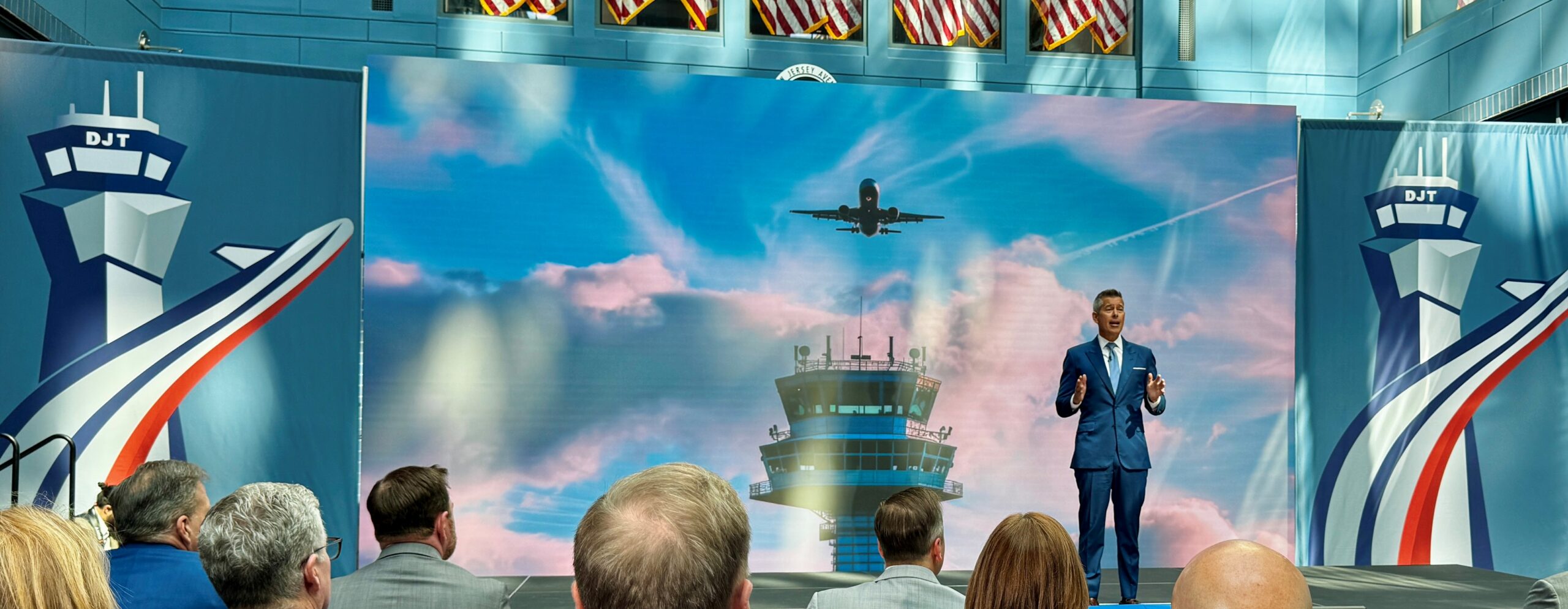
On April 21, 2026, U.S. Secretary of Transportation Secretary Sean Duffy and FAA Administrator Bryan Bedford hosted the Modern Skies Summit to showcase progress and plans for FAA’s Brand New Air Traffic Control System (BNATCS) airspace modernization program. In keynote remarks opening the event, Secretary Duffy reviewed the underlying need for and goals of BNATCS. He stressed that the initial $12.5 billion provided for the program through last year’s One Big Beautiful Bill Act (H.R. 1) has enabled investments in reliable, modern digital technologies and capabilities. These aim to address chronic air traffic control (ATC) system issues, from communications disruptions that affected operations in the New York TRACON last year to electronic component failures that necessitated the evacuation of the Potomac TRACON several weeks ago.
Industry played a prominent role in the Summit with Airlines for America president and CEO, Chris Sununu, speaking on behalf of stakeholders of the Modern Skies Coalition, of which ACI-NA is part. Speakers throughout the Summit reiterated the critical role of all industry partners engaging in the BNATCS program to ensure safe operations while transitioning to new systems.
Secretary Duffy and FAA’s Acting Chief Technology Officer, Rebecca Guy, provided additional details about key technologies that are being deployed under BNATCS.
- Replacement of aging copper communications lines with fiber optic lines
- Upgrades to and replacement of key ATC communications infrastructure, including radios and voice switches
- Replacement of aging airport surveillance and surface surveillance radar systems with modern equivalents
- Expansion and expedited deployment of the Terminal Flight Data Manager (TFDM) system, which enables controllers to transition from paper flight strips to digital flight strips, providing more robust and dynamic air traffic management capabilities
- Improvement of communications and weather information systems available to pilots and air traffic controllers in Alaska
Guy was joined by Justin Ciaccio, president of the National Aerospace Solutions Sector at Peraton, the contractor selected in December 2025 to lead BNATCS implementation as the program’s prime integrator. Both Guy and Ciaccio underscored the need to deliver these capabilities by the end of 2028.
FAA Administrator Bedford discussed the need to develop and implement air traffic management automation capabilities that require funding beyond the currently appropriated $12.5 billion. Bedford said FAA needs to work on optimizing aircraft trajectories at a national scale in real time to facilitate safer, more efficient air traffic management within the U.S. National Airspace System (NAS).
ACI-NA continues to engage with DOT and FAA on BNATCS, especially to ensure the perspective of airport operators is considered as decisions are made. Airports are grateful to DOT and FAA leaders for continuing to recognize the role of the industry in this critical program.