A Blueprint to leverage AI that delivers operational, safety and business excellence.

By Wayne Arvidson, CTO, Verticals, AI & Computer Vision, Dell Technologies

Anyone who has been tracking the progress of artificial intelligence (AI) knows that the past year has seen the emergence of game-changing tools in the mainstream such as natural language processing (NLP) and multimodal large language models (LLM), AI-powered digital twins, convolutional neural networks (CNN) and more. There is no doubt that such tools are lowering the barrier to entry to customized business insights. Outcomes that once required a team of highly skilled technical people can now be achieved in a far more cost-efficient and effective way.

Embedding these game-changing technologies requires a blueprint. As accessible as these technologies have become, airports need to fully understand the road ahead if they want to implement them efficiently and cost effectively. They need to be realistic about what they can do in-house and what technology solutions and consultancy and support services they need to buy-in.

The starting point of the blueprint is to define the desired outcome as this will establish the workflow. Having measurable goals and objectives defined at the outset is key to tracking progress, performance and whether the value delivered aligns with expectations. The workflow will vary depending on whether the airport needs a customized outcome or can leverage existing outcomes delivered by readily available applications.

The next stage is to identify the data sources that contain the information that need to be analyzed to deliver actionable insights, and where the work should take place. For example, video data is too large to be moved to a central location and needs to be analyzed where the activity is actually taking place to deliver real-time insights.

This sets the groundwork for a clear pathway for handling the data. It’s important to take a broad view of the range of data sources available to avoid data siloing. This allows multiple insights to be extracted from that same pool of data. For example, the same frame of video can deliver safety, operational, and passenger experience insights simultaneously.

Airports have a number of options open to them to explore their data (looking at the structure, patterns and relationships that exist in it), and enrich it (enhancing it by adding data, context or other information from other sources). This requires data architects or specialized tools to decide which data integration process they will use to combine the data from these multiple sources into a single, consistent dataset.

The next step is to create and refine the model, typically starting with an integrated one from a third-party application or marketplace. This phase is generally not needed with an off-the-shelf application as the model is already embedded. Once defined, the model then moves from the development and testing environment into real-world implementation. The model and its inputs and outputs are monitored and analyzed against specific metrics and benchmarks to measure the performance, reliability, and effectiveness and to gain insight on its performance and behavior via observability tools.

To conclude, these new low-code, no-code tools are now readily accessible

In conclusion, start with the desired business and operational outcomes that you are trying to achieve. This will define the workflows required. Then, look at your data holistically, as this will provide multiple insights across all your data sets, delivering them in the context of the specific business operation consuming it. With this exciting set of new tools available, you now have the ability to achieve outcomes customized to your business practice and facilities.

Visit the Dell Technologies and NVIDIA booth at the ACI Annual Conference and learn more about how we are helping airports across the globe during our solutions showcase on Monday September 9th at 10:00am.

Wayne Arvidson, CTO, Verticals, AI & Computer Vision, Dell Technologies

Wayne has over 25 years of senior management experience in companies ranging from start-ups to Fortune 50 firms. He currently drives market strategy for Dell Technologies’ Computer Vision and Edge Verticals practices. The team is responsible for identifying and managing strategic technology partners that create solutions to make the world a safer and smarter place. He is helping to drive industry transformation by educating the market on the role these solutions play as the foundation of a “safe + smart” infrastructure.

Wayne’s articles have appeared in numerous industry publications, and he is a regular speaker at industry events. He currently serves on the Security Industry Association committees for International Relations, Marketing & Membership, Homeland Security, Government Affairs, Video & Vision, and Body-Worn Video Technology and is a member of the International Association of Chiefs of Police, focusing on Law Enforcement Information Management. He also serves on the Steering Committee at Airports Council International.

DISCLAIMER

This article was provided by a third party and, as such, the views expressed therein and/or presented are their own and may not represent or reflect the views of Airports Council International-North America (ACI-NA), its management, Board, or members. Readers should not act on the basis of any information contained in the blog without referring to applicable laws and regulations and/or without appropriate professional advice.

Navigating the Skies: Balancing Airport Upgrades with Electrification and Green Technologies

By Tam Osentowski, Global VP of Transportation, Schneider Electric

Airports stand at a crossroads, facing the pressing need to invest in electrification, green technologies, and operational efficiency while also addressing challenges related to expanding capacity, government regulations, technological advancements, and enhancing passenger experience. The good news is amid these complex demands, solutions already exist to help airports overcome these challenges and transition toward a sustainable and efficient future.

The challenge of electrification and green technologies while addressing operational efficiency

As the world shifts towards sustainable practices, airports are under increasing pressure to electrify their operations and integrate green technologies.  When an airport implements electric ground support equipment (eGSE), electric vehicle and bus charging infrastructures, and possibly in the near future, electric-powered vertical takeoff and landing (eVTOL) aircrafts, it must also consider the financial burden of upfront costs and infrastructure limitations of the electrical grid.

Operational efficiency is pivotal for airports striving to balance sustainability with functionality. With over 200 disparate systems, the lack of data points is not the challenge, it is the lack of actionable insights.  Having a birds-eye view of energy consumption offers a path that allows operators to identify and eliminate waste and use the data.   However, achieving this efficiency amidst a backdrop of financial burdens, cybersecurity and evolving government regulations is no easy feat.

The digital transformation toward sustainability

To successfully overcome these challenges, airports need to adopt a strategic approach, employing effective planning, streamlined processes, and valuable operational insights. Digitalization will play a crucial role in enabling this transformation. By becoming digitally connected, a smart airport can then access real-time data and leverage advanced analytics to provide meaningful information to the right people at the right time.

At the facility infrastructure level, one impactful solution is the implementation of an integrated Building Management System (iBMS). This system offers a unified view, or a ‘single pane of glass’ for centralized monitoring and control of various systems such as HVAC, lighting, and security. HVAC itself can represent up to 60% of an airport’s energy consumption.   With an iBMS, an airport can improve visibility, coordination, and maintenance of these valuable resources while supporting the airport’s goals of decarbonization and achieving green building certification. The iBMS facilitates informed decision-making and proactive maintenance, thus contributing to operational efficiency and cost savings.

By implementing a power management system and advanced analytics, airports can revolutionize their operations, becoming significantly more efficient and environmentally friendly. The power management system allows for the intelligent control and monitoring of energy usage, optimizing the distribution of power throughout the airport infrastructure. Coupled with advanced analytics, airports can gain valuable insights into their energy consumption patterns, enabling proactive decision-making and the identification of opportunities for efficiency improvements. This not only reduces operational costs but also minimizes the airport’s environmental footprint by curbing energy wastage and promoting the use of sustainable energy sources.

The Path Forward

With newer business models, such as Energy as a Service (EaaS), an airport can consider a way to get its capital expenditure projects completed as JFK did for the New Terminal One (NTO).  Using an EaaS model to design, construct, and operate an integrated microgrid infrastructure, NTO receives sustainable, resilient, and cost-predictable energy without the upfront costs.

Moreover, by leveraging Schneider Electric’s EcoStruxure Power and Building Management System solutions, airports can navigate the complexities of electrification, green technologies, and operational efficiency. These solutions enable airports to monitor and manage their energy consumption, integrate renewable energy sources, and ensure the seamless operation of critical systems. Learn more about our solutions at https://www.se.com/ww/en/work/solutions/for-business/transportation/

About the author

Tam is Vice President, Global Transportation Segment where she is responsible for the strategy, sales & deployment of Schneider Electric’s portfolio for infrastructures of the future across 40 countries. Tam has been at the forefront in defining and delivering solutions to address customer pain points through her 22-year tenure at Schneider Electric.  Her expertise in sustainability consulting services and strategic customer experience management allows her to deliver tailored services for new and existing customers, with a particular focus on leading electrification efforts to build more sustainable operations.


DISCLAIMER

This article was provided by a third party and, as such, the views expressed therein and/or presented are their own and may not represent or reflect the views of Airports Council International-North America (ACI-NA), its management, Board, or members. Readers should not act on the basis of any information contained in the blog without referring to applicable laws and regulations and/or without appropriate professional advice.

The Remediation of PFAS Chemicals: Destroy Them in Place

Dan Griffiths, Parsons’ Emerging Contaminants Practice Director

For many years, airports worldwide were required to use aqueous film-forming foam (AFFF) for fire suppression. While effective in extinguishing fires, AFFF contains per- and poly-fluoroalkyl substances (PFAS), a class of chemicals now recognized as emerging contaminants due to their persistence in the environment and potential health risks. Unfortunately, the recommended fire response protocols and training requirements led to widespread PFAS releases into soil and water, posing significant environmental challenges.

With the EPA’s new PFAS requirements, emerging contaminants are an area of concern for many airports. Recognizing the pressing need for an effective solution, Parsons has developed a new patented technology called Hot in-situ chemical oxidation (Hot ISCO) to address the issue of PFAS contamination in soil and groundwater. This groundbreaking technology is a significant step forward in environmental remediation and cost-effectively destroying PFAS underground, ensuring that aviation clients can meet the latest regulatory compliance requirements and maintain the highest standards of environmental stewardship.

Understanding PFAS Contamination

PFAS are synthetic chemicals that are resistant to heat, water, and oil, making them useful in various industrial applications. However, the chemical properties that make them so useful also make them persistent in the environment and difficult to address. Traditional remediation methods have been shown to be ineffective or only partially effective at addressing PFAS, often transferring or transforming PFAS rather than destroying these compounds.

The persistence of PFAS has led to widespread contamination of groundwater sources near airports and other sites where AFFF was used extensively. This contamination poses risks not only to human health but also to ecosystems that rely on clean water sources.

Introducing Hot ISCO: An Innovative Solution

Parsons’ Hot ISCO technology offers a promising solution by combining a slight temperature increase above ambient conditions with a metals-based catalyst and an off-the-shelf low-cost oxidant. This combination produces high-energy radicals capable of destroying PFAS, leaving non-toxic products including carbon dioxide and fluoride salts.

Key Components of Hot ISCO:

  1. Temperature Rise: Unlike traditional thermal treatments that require high temperatures, Hot ISCO operates with only a modest increase above ambient temperature.
  2. Metals-Based Catalyst: The inclusion of specific metals acts as a catalyst that uses the thermal energy more efficiently to produce free radicals of sufficient energy to breaking down PFAS molecules.
  3. Oxidant: An oxidizing agent is introduced into the contaminated medium, which reacts with catalysts and the PFAS compounds under the influence of heat to completely degrade the PFAS to non-toxic end products.

Benefits of Hot ISCO Technology

  1. Efficiency: By targeting both soil and water contamination simultaneously using low-cost reactants.
  2. Cost-Effectiveness: The modest temperature rise required reduces energy consumption compared to traditional thermal methods.
  3. Environmental Safety: The process degrades PFAS into non-toxic products rather than merely transferring contaminants between media or transforming regulated PFAS into other PFAS molecules.
  4. Scalability: This technology can be scaled up for large-scale applications at various contaminated sites.

Laboratory Work and Field Trials

The development of Hot ISCO involved extensive laboratory research followed by field trials. Initial lab results demonstrated significant reductions in PFAS concentrations within treated samples.

Field trials confirmed these findings after the successful application at contaminated sites without causing secondary pollution or adverse effects on surrounding environments.

Delivering a cleaner world

Hot ISCO technology marks an important step forward in PFAS management, protecting the environment and enhancing the operational efficiency and sustainability of aviation clients globally. Leveraging this advanced approach offers an efficient yet environmentally safe means for degrading persistent pollutants like PFAS into harmless end products—a significant development for addressing remediation needs from the historical use of AFFF at airports and other environmental remediation efforts worldwide.


About the Author

Dan Griffiths, Parsons’ Emerging Contaminants Practice Director, has +28 years of experience designing and implementing investigation plans/remedies for complex sites impacted by emerging contaminants, chlorinated solvents, metals, and explosives. He leads Parsons’ R&D for remediation advancement and contributes to the company’s in-situ guidance documents for the Air Force and ITRC.


DISCLAIMER

This article was provided by a third party and, as such, the views expressed therein and/or presented are their own and may not represent or reflect the views of Airports Council International-North America (ACI-NA), its management, Board, or members. Readers should not act on the basis of any information contained in the blog without referring to applicable laws and regulations and/or without appropriate professional advice.

2024 “Reclaiming the Sky” Resiliency Project Winners Announced

The stories of 9/11’s aviation’s heroes continue to prove that today’s young aviation managers – tomorrow’s leaders – can learn lessons and apply them to meet challenges in their personal and professional lives.

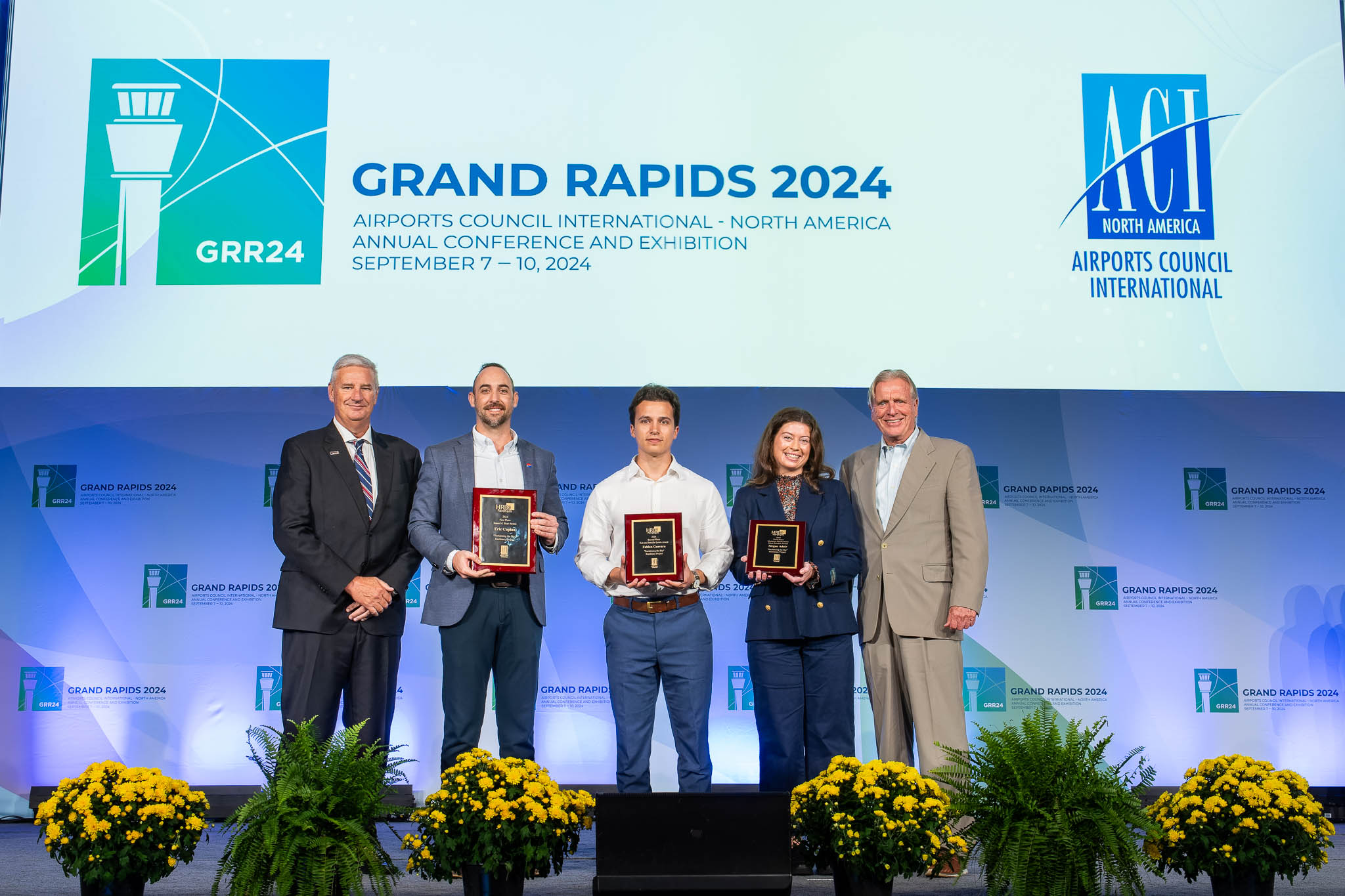
The Human Resiliency Institute at Fordham University, which offers Edge4Vets, and Airports Council International – North America (ACI-NA) partnered in 2024 to expand the “Reclaiming the Sky” Resiliency Project build on gains made during the “pilot” program of 2023. SSP America provided sponsorship support to make the program possible.

Young Professionals, those under forty years of age who work in middle management jobs at airports and airport service companies across the US and Canada, were invited to read the stories of aviation heroes profiled in the book, “Reclaiming the Sky,” by Tom Murphy, and participate in a workshop with aviation mentors to explore the lessons of resiliency.

As a follow up, they were offered a chance to compete in an essay competition to express what they learned. Three winners were announced this week and will be presented with their awards of $1000, $500 and $250 at ACI-NA’s annual conference in Grand Rapids, MI on September 10.

The winners are First Place: Eric Caplan, Sustainability and Resilience Program Director, Tampa International Airport; Second Place: Fabian Guevara, Analyst, Connico; and Third Place, Megan Adair, Executive Assistant, Departure Media.

Their winning stories can be read at ReclaimingTheSky.com.

Young Professionals were given free Ebook copies of “Reclaiming the Sky” and a chance to read the stories of airport and airline employees who came to work in New York, Boston and Washington, DC on the morning of 9/11 expecting a normal day, only to find that “just doing my job” was to become the creed of heroes. The stories tell how the front-line aviation employees responded with courage, selfless and resiliency that day and in the weeks and months that followed to rebuild their lives and reclaim hope – while helping to get the country moving again.

The top award, the “Susan M. Baer Award,” is named for Susan Baer who was General Manager of Newark Liberty International Airport on 9/11.

In addition to cash prizes, first, second and third place essay winners have earned free registration to ACI-NA’s annual conference in Grand Rapids, MI, in September to meet with today’s leaders and build their network of aviation contacts.

The project, which supports the development of the next generation of aviation leaders, is planned for expansion in 2025, including extending participation to University Aviation Association and its 128 member schools with 95,000 aviation high school and college students in North America.

Young Professionals participating in 2024 included: Kevin Podsiad, Hillsborough County Aviation Authority; Kristin Jewell, Baton Rouge Metropolitan Airport; Eric Caplan, Tampa International Airport; Terasia Arrington, Charlotte Douglas International Airport; Caleb Claxton, Connico; Elie Germain, Connico; Veronica Takacs, Connico; Fabian Guevara, Connico; Faroq Al-Rjoub, Connico; Noah Yarnell, Metropolitan Washington Airport Authority; Elizabeth Cunninghan, Philadelphia International Airport; Carey Metcalfe, Minneapolis St Paul International Airport; Bulent Ulas, River Island Airport Solutions; Kerry Adams, Departure Media; Megan Adair, Departure Media; Armin Mahboubi, Jazz Aviation LP.

Judges for the essay competition included aviation industry leaders: Bob Stanton, Cedric Fulton, Lysa Leiponis, Eileen Ammiano, Kathy Denker and Debbie Roland.

For more information, visit ReclaimingTheSky.com. For aviation companies looking to participate in the expansion in 2025, contact Tom Murphy at Tom@edge4vets.org.

Award winner video

A Young Professional’s View on Air Cargo

Liliana Bustos,  Chicago Department of Aviation

As a new employee in the air cargo industry, every day is a thrilling look into the world of global logistics. Air cargo operations at O’Hare Airport are fast-paced and ever-changing. Each day presents new challenges and opportunities for growth and learning. Patrolling the airfield has quickly become my favorite activity. Observing just how quickly things move—from the moment a plane touches down on a runway to the moment people start unloading the freight—makes the air cargo process run like a well-oiled machine. It is truly impressive to see how many souls it takes to keep cargo operations running smoothly, which is something you don’t typically realize when you’re on the receiving end of a package. Understanding proper handling procedures, FAA guidelines, and the network of airports and carriers, brings the air cargo process full circle. I am grateful for my membership as a young professional with the ACI-NA Cargo Steering Committee, which has opened my eyes to the world of cargo beyond O’Hare. My committee colleagues have encouraged and supported my growth at conferences, presentations, and beyond. As a young professional, it is reassuring to know that I will continue to forge connections and contribute toward positive changes in the field. It has been a privilege to work at an airport that plays such a vital role in keeping global trade moving forward, and I look forward to any challenges the world of air cargo may present.

Review Grants and PFC Collections to Maximize Capital Funding

Brian Drake, Assistant Vice President, Unison Consulting, Inc.

Consider how periodic reviews of grants and PFC funding with your capital program can generate out-of-the-box thinking and stimulate new approaches to securing valuable funding for your airport projects.

Here are a few real-world examples of how Unison Consulting was able to partner with clients to garner much-needed revenue:

  • In recent years, we secured $1.8 million in AIP discretionary funds for a small hub airport supplemental environmental impact statement resulting from litigation against the airport.
  • We showed one of our medium clients a project that reduced the number of gates while still meeting the “significant contribution” standard applicable to the airport at the time for collecting PFCs at the $4.50 rate. This enabled the airport to increase its annual PFC collections by 33% and meet its capital needs.
  • For a medium hub airport, we proved an airport’s PFC projects initially approved at the $3.00 rate met the same “significant contribution” standard to qualify for the $4.50 rate, enabling the airport to avoid a 33% reduction in annual PFC collections.

For expert analysis, consider contracting financial experts who know the airport business to assist with the financial review of your airport. Often, you will realize a substantial return on investment.

Unison Consulting’s Finance Team provides airport clients with a wide range of financial services. With experience at over 100 airports, our team offers a strategic approach tailored to our clients’ specific goals and objectives. We have successfully completed numerous projects for airports of all sizes and welcome the opportunity to meet with you to understand your goals and objectives and present details of our relevant experience.

Brian Drake, Assistant Vice President|
Unison Consulting, Inc.
(949) 462-9036 | briandrake@unison-ucg.com

Brian has over 16 years of airport financial experience. Brian’s financial expertise in airport finance allows him to provide creative solutions to airport executives. Brian specializes in complex financial modeling to support all types of airport projects.

DISCLAIMER

This article was provided by a third party and, as such, the views expressed therein and/or presented are their own and may not represent or reflect the views of Airports Council International-North America (ACI-NA), its management, Board, or members. Readers should not act on the basis of any information contained in the blog without referring to applicable laws and regulations and/or without appropriate professional advice.

Teaching the Next Generation Resiliency Lessons from 9/11’s Aviation Heroes

By Tom Murphy, Human Resiliency Institute at Fordham University

Today’s young employees at airports and students studying aviation will be tomorrow’s leaders. Undoubtedly, they will face challenges.

The Human Resiliency Institute at Fordham University, which also offers Edge4Vets, is partnering with Airports Council International-North America (ACI-NA) to build upon progress made in 2023 with the “Reclaiming the Sky Resiliency Project” to give our industry’s young professionals (age forty and under) an opportunity to learn resiliency lessons from the aviation heroes of September 11. 2001 and develop tools to meet those challenges.

The program, which was also introduced this spring to include aviation students studying in the University’s Aviation Association’s 128 member schools, is being supported by leading aviation organizations, including SSP America and others committed to developing the next generation.

Participants in the program will have a chance to read the stories of airport and airline employees who went to work in New York, Boston and Washington, DC on the morning of 9/11 expecting a normal day, only to find that “just doing my job” was to become the creed of heroes. Their stories are chronicled in Reclaiming the Sky, by Tom Murphy, an aviation consultant and Director of the Human Resiliency Institute at Fordham. He saw first-hand how his aviation colleagues responded with courage, selflessness and resiliency to 9/11 to rebuild their lives and reclaim hope.

The young professionals in the 2024 program will have a chance to read Reclaiming the Sky and attend an online workshop on July 19 to discuss what they learned with their peers and aviation executives. Participants will be invited to write an essay to share how they can apply the resiliency lessons as “tools” to meet challenges in their lives and be eligible for cash awards ranging from $250 to $1000. The top award will be called the “Susan M. Baer Award.” In addition to cash prizes, first, second and third place essay winners will  receive a complimentary registration to ACI-NA’s Annual Conference and Exhibition in Grand Rapids, Michigan in September and will be recognized for their achievement.

Participation in the young professional program is open to employees of ACI-NA member airports/organizations, that are age 40 and under. There will be 25 openings.

Register here.

For full details on the program, visit ReclaimingTheSky.com.

For more information, please contact Tom Murphy at Tom@edge4vets.org.


The “Reclaiming the Sky Resiliency Project” gives today’s “Young Professionals” at airports a chance to learn resiliency skills from the example of 9/11’s aviation heroes. The project is offered for airport employees under 40 by the Human Resiliency Institute at Fordham University and Airports Council International – North America and with support from major aviation companies, such as SSP America and others. Full details at ReclaimingTheSky.com.


Airports Soar with New Technology for Safety and Operational Excellence

Michael Bettua
CEO and Co-founder, Volan Technology

One thing I’m hearing a lot about from airport operators is the stress around ensuring compliance with the FAA’s Safety Management System rule that went into effect this year.  The new rule requires airports do a better job detecting incidents, analyzing what happened, capturing data, and reporting it all to stay compliant.

More than 250 major US airports are affected, and they’re feeling the burden – especially when it comes to monitoring the outdoor areas like runways, taxiways and ramps. That’s where a lot of the riskier incidents can occur with aircraft, vehicles, equipment and personnel. Traditional methods just aren’t cutting it.

Think about it – at any given time there are thousands of people and vehicles moving on an airfield. Fuel trucks, catering vehicles, luggage teams, maintenance crews with mowers and plows, not to mention all the construction equipment for major projects. One mishap, like a lawn tractor veering into a restricted area, could be a serious safety concern.

Then you’ve got the added challenge of properly escorting and monitoring any third-party employees and contractors that need access to secure areas. Airports have to assign a human escort to supervise outside workers to maintain security protocols. But that’s extremely labor intensive, costly, and prone to errors with escorts getting fatigued or distracted.

What airports really need is a technological solution to achieve the heightened monitoring, incident detection and safety forensics the FAA now mandates. A system providing omnipresent awareness of every vehicle and person’s location, able to instantly identify potential threats and rapidly alert the right personnel.

That’s why innovative airports are deploying affordable micro-location technology across their properties. Unlike traditional GPS, cellular service or Radio Frequency ID which is too broad or costly, these new systems use Internet of Thing (IoT) sensors and small wearable locators to pinpoint the real-time geography of every asset within 1-2 meters.

One major Midwest airport rolled out a turnkey geofencing solution that works like a virtual fence-line you can construct anywhere. Using credit card-sized locators on vehicles and badges, it tracks the precise positions of all assets simultaneously, both airport resources and any contractors needing access to secure areas.

If a vehicle strays into a restricted zone, it instantly triggers an alert identifying the location and equipment involved. For safety incidents, it captures granular forensic data on who was where when the event occurred to streamline investigations and reporting.

But the benefits go way beyond just complying with the FAA’s new requirements. This operational data is a gold mine for optimizing processes, resource allocation and cost savings.

Airport teams can visualize traffic patterns, identify inefficient vehicle routings or instances of excessive idling to reduce emissions and fuel costs. They can analyze utilization of specific equipment types to ensure assets are being maximized. The data enables accurate labor forecasting and workforce planning based on proven demand.

There are a number of other use cases too, like quickly locating any misplaced or stolen asset, ensuring contractors adhere to specified routes and schedules, automating lone worker policies, and more.

The IoT approach is flexible and scalable so airports can start focused but keep expanding capabilities over time. Deploying it is quick and affordable – the locators and gateways are solar-powered requiring no hardwiring or costly infrastructure. Full facility coverage can go live in days versus months for traditional systems.

At the end of the day, airports can’t afford to rely on manual monitoring that fails to provide the rigorous safety oversight required by the FAA. The threat of violations is serious from a cost and negative publicity standpoint. Precise location data and analytics are what’s needed to identify risks, demonstrate compliance and ensure the safe and efficient operations of our nation’s airports.

This kind of innovative thinking will separate the leading airports in the years ahead. Those embracing affordable IoT solutions today will be best positioned to handle the challenges of tomorrow – whatever new operational or regulatory requirements emerge.

Michael Bettua is the CEO & Co-Founder, and Chairman of the Board, for Volan Technology Inc. Volan created the Volan Positioning System to help airport operators increase safety and security, meet new FAA Safety Management standards, lower operating costs, and increase fiscal compliance.   


DISCLAIMER

This article was provided by a third party and, as such, the views expressed therein and/or presented are their own and may not represent or reflect the views of Airports Council International-North America (ACI-NA), its management, Board, or members. Readers should not act on the basis of any information contained in the blog without referring to applicable laws and regulations and/or without appropriate professional advice.

SMF’s Recipe for Success: A Fresh Take on Airport Food + Beverage

By: Stephen Clark, C.M., Deputy Director, Airport Commercial Development

When the concessions team at the Sacramento International Airport (SMF) sat down to look at the opportunity to recreate their food and beverage program they agreed that they wanted to approach it in a radically different way.

Food and beverage programs bring revenue to an airport, of course, and travelers certainly need dining options, but the types of food offered can also communicate identity and inclusivity. SMF is primarily an origin and destination airport with only five percent of passengers waiting on

connections. The concessions team at SMF sought to create a program that would highlight Sacramento’s vibrant farm-to-fork culture, offer a sense of place, and give guests a sense of value for money from quick service eateries to premium sit-down experiences.

All these considerations were on the mind of the concessions team at SMF while preparing a Request for Proposal (RFP), which saw nearly every tenant space up for grabs.

Beginning in 2022, SMF began reaching out to hundreds of organizations alerting them to the upcoming RFP opportunity, including partnering with the local Small Business Development Center (SBDC). Instead of only asking major food and beverage operators to recruit local restaurants, the SMF team heavily advertised the opportunity directly to local business owners. Later that same year, they surveyed guests and utilized a research group to learn that health, affordability, and choice of cuisine were high priorities for travelers.

When it came to setting goals and crafting the RFP, the team wanted it to be accessible to both small businesses and large proprietors. They petitioned the Federal Aviation Administration (FAA) to set an ambitious 15 percent goal of Airport Concessions Disadvantaged Business Enterprise (ACDBE) businesses and a small business goal of 30 percent. When the RFP was completed the ACDBE result was 38 percent of the program, and small businesses represented 44 percent of recommended awardees.

“We wanted to create genuine opportunity for small and large businesses alike to ensure equitable conditions for consideration,” said Andrew Durkee, Concessions Manager, Sacramento County Department of Airports. “It was important to us that the best concepts and a superior customer experience rise to the top and we crafted the FRP to reflect that.”

Durkee, and his team continued to partner with SBDC to provide coaching and education to businesses interested in proposing. Of the awarded contracts one local business became ACDBE certified, and another took advantage of extensive coaching through the SBDC. This was so successful that SMF formalized a partnership with the SBDC to continue offering seminars and educational opportunities for local businesses to learn more about different avenues available to work with the airport.

In another break with tradition, the team decided to forgo a traditional minimum annual guarantee (MAG) in favor of rent as a pure percent of gross revenue based on category. Durkee explains that ditching MAGs creates a “flexible and equitable approach to concessions, one that aligns with industry recommendations and promotes a healthy, competitive environment for all stakeholders involved. This move is expected to foster a more dynamic and responsive concessions program, benefiting passengers, concessionaires, and the airport alike.”
Overall, the new program represents 18 new concepts which will replace or upgrade existing facilities in phases beginning in 2024. Included in the new concepts is a local Michelin listed taco restaurant Nixtaco) as well as the Airport’s first pan-Asian offering, Bambuza Vietnam Kitchen + Bar. There is also a local brewery, Sacramento’s first distillery, plus a smattering of other well-known local restaurants.

Stephen Clark joined Sacramento County Department of Airports (SCDA) in November 2021 and is responsible for the commercial and tenant activities at SMF, MHR, SAC, and F72. Charged with oversight and leadership of SCDA’s business development, air service development, communications/marketing, agreements with airlines and other tenants, including concessions, rental cars, and transportation network companies, and leasing of airport facilities and land.


DISCLAIMER

This article was provided by a third party and, as such, the views expressed therein and/or presented are their own and may not represent or reflect the views of Airports Council International-North America (ACI-NA), its management, Board, or members. Readers should not act on the basis of any information contained in the blog without referring to applicable laws and regulations and/or without appropriate professional advice.

Understanding how AI will impact Passenger Support and the Overall Traveling Experience

By Alfredo Vaamonde, CEO & Founder of WingMates

In an era where efficiency and customer satisfaction are paramount, airports globally are turning to innovative solutions to enhance the passenger experience. Among these innovations, artificial intelligence (AI) stands out as a game-changer, promising to transform how airports support passengers throughout their journey, from booking their trip to landing at their destination. This article delves into the transformative potential of AI travel assistants, showcasing how they can elevate the passenger experience while simultaneously reducing  operational costs.

The Rise of AI in Airport Operations

The integration of AI technologies across various sectors has been nothing short of revolutionary, with the travel and airport operations sphere being no exception. Recent advancements have positioned AI as a key player in enhancing passenger support services, leveraging capabilities like natural language processing, machine learning, and automation to offer unparalleled efficiency and convenience.

Understanding AI Travel Assistants

AI travel assistants, powered by advanced algorithms and capable of understanding passengers’ needs, are at the forefront of this transformation. These systems range from chatbots handling customer service inquiries to automated check-in kiosks and apps providing personalized travel information. Their ability to offer quick, customized assistance around the clock marks a significant leap forward in how airports interact with passengers.

Enhancing Passenger Experience with AI

Personalized Travel Assistance: AI travel assistants can tailor information and support to individual needs, offering a customized travel experience that enhances satisfaction. From booking flights to receiving recommendations on where to eat at the Airport, AI assistants are the ideal travel agents.

Real-time Information and Assistance: With AI, passengers can receive instant updates on flight statuses, gate changes, and security wait times, enabling them to navigate the airport with ease.

Multilingual Support: AI’s ability to interact in multiple languages breaks down language barriers, ensuring all passengers receive the support they need.

Reducing Operational Costs with AI

Automated Customer Service: By handling routine inquiries, AI can reduce the need for human staff, cutting labor costs and allowing human agents to focus on more complex tasks.

Efficiency in Resource Allocation: AI’s predictive capabilities enable airports to optimize staffing and resource allocation based on anticipated passenger flows, enhancing operational efficiency.

Data-Driven Insights for Continuous Improvement: AI systems can analyze passenger feedback and behavior to identify improvement areas, driving continuous enhancements in service and operations.

An Omnichannel Approach to Passenger Support

AI assistants may be deployed on mobile apps, kiosks, websites, or social media platforms. This omni-channel accessibility ensures that passengers can receive assistance and information wherever they are and however they prefer to communicate. Whether a traveler needs to check their flight status via a quick text message, get directions through an airport app, or inquire about services through a website chatbot, AI assistants are there to provide consistent, reliable support. This ubiquity not only enhances the customer experience by meeting passengers on their chosen platform but also significantly boosts the efficiency of airport operations.

By integrating AI travel assistants across all channels, airports can ensure a cohesive, streamlined experience that caters to the digital habits of modern travelers, thereby reinforcing the airport’s commitment to accessibility and convenience.

Conclusion

AI travel assistants represent a significant step forward in the quest to enhance passenger experience and streamline airport operations. By embracing AI, airport operators can not only meet but exceed the evolving expectations of travelers, setting a new standard for efficiency and  satisfaction in the travel industry. As we look to the future, the role of AI in airport operations is poised for further expansion, promising an era of smarter, more passenger-friendly airports.

For airport operators, the message is clear: the future of airport operations is in leveraging AI technologies. By exploring AI solutions and partnering with technology providers, airports can  embark on a transformative journey toward improved passenger support and operational efficiency. The time to act is now—embrace AI and unlock a new horizon of possibilities for your airport and its passengers.

DISCLAIMER

This article was provided by a third party and, as such, the views expressed therein and/or presented are their own and may not represent or reflect the views of Airports Council International-North America (ACI-NA), its management, Board, or members. Readers should not act on the basis of any information contained in the blog without referring to applicable laws and regulations and/or without appropriate professional advice.