
Airplane takes off in front of airport at sunset

Finding a Seat at the Slots Table

Airports Align to Amplify Visibility, Voice in Worldwide Slots Guidelines Process  

By Nicole Nelson

Imagine a dozen members of your extended family showing up unannounced at the front door of your home to tell you they’re not just staying overnight, but they’re moving in.

This visualization is how Port Authority of New York & New Jersey Director of Aviation, Huntley A. Lawrence, views the airport’s role in the current system to allot airport capacity, with the International Air Transport Association representing the family of international air carriers and airports having no voice when made to obligingly open their doors.

“You may love these people – at least some of them anyway – and you want to accommodate them as best as you can, but without time and money to plan, and buy extra beds, linens, and food, you’re not always going to be a very good host,” Lawrence related. “You may normally be an excellent host, but without having a say about who stays over, and when, you simply can’t be expected to shine.”

It is Huntley’s desire to not only provide the PANYNJ’s airports—including slot-constrained John F. Kennedy International, Newark Liberty International, and LaGuardia– but all airports the ability, “to shine always.” To that end, Lawrence and his staff have become increasingly vocal on the need for airports to have a voice in the International Air Transport Association (IATA) Worldwide Slots Guidelines (WSG) process. Designed by airlines decades ago, airlines continue to write the rules and govern the process of allocating airport capacity that, ironically, does not include airports.

“You are literally at your airport, and these new rules are being made, are being modified, or being considered, and you are an outsider looking in,” Lawrence confounded, citing the need to make the current slot system more transparent, pro-consumer and pro-competition.

Lawrence said there is no question that the current system is complex by design. The legacy carriers have designed a system that makes it difficult for new airlines, or non-IATA carriers, to penetrate a multifaceted system of codes, computer messages, and also meetings.

“I am not a regulator of slots, but what I’m saying is that we’ve got a less-than-okay process in the United States,” Lawrence said, noting the current slot system poses a barrier to market entry that should be looked at very closely with all key stakeholders. “We don’t have an issue with the rules that are written. We actually have an issue with how the rules are administered, and the transparency of the entire and overall process.

“We have been crystal clear that there is an opportunity to improve collaboration, and utilization of our assets through a way more transparent process. We are certainly looking at a strategic review of the Worldwide Slot Guidelines to advocate for reform, but our focus is not on authority, or power, or control. It is the effect on the consumer, the market, competition, and the people that fly, most of all.”

PANYNJ has been looking at the various changes, or iterations of the slot order in place today, and has responded to various Notices of Proposed Rulemakings from the FAA and is a key participant in the Strategic Review of the WSG, a collaborative initiative of Airports Council International, IATA and the Worldwide Airport Coordinators Group (WWACG) that was welcomed by the Economic Commission at the 39th ICAO Assembly. Since the aviation community agreed to establish this in-depth review of the slot guidelines in 2016, PANYNJ Manager of Industry and Regulatory Relations, Bradley Rubinstein, has helped shape strategic direction for airports globally as the North American representative to the ACI Expert Group on Slots. Chief Strategy Officer Patty Clark has served on the Access to Congested Airports Task Force in the Strategic Review.

After participating in monthly meetings for the better part of two years on the taskforce, Clark said her contribution within the WSG subcommittee is her continued advocacy for the sharing of WSG data with the airport community.

“Believe it or not, data is almost exclusively given to airlines, but never to the airport, which is really unconscionable in many ways,” Clark said. “My task force that includes facilitators, airlines, and airports, are in agreement, so we hope to see positive movement there, in that data would be provided to airports and airlines. It seems very elemental, yet that’s a pretty heavy lift to get two words in.”

In addition to requesting the information for airports among the other stakeholders, Clark recommended universal formatting in Excel spreadsheets.

“One of the things that happens is you will get reams of paper with 800 pages of data requiring significant mining, and special software, et cetera. If you provide the data in a format that is universally accepted, more stakeholders could use it.

“Given the other things that we need to talk about, that is what we may accomplish at the end of the day. It is not as significant as the work that we really need to get done,” Clark said. “I’m not going to deny it is progress, but it is kind of disappointing given the barrier to entry for new entrants.”

“The Port Authority has long sought to make our airports available to anyone who wants to participate in them, but the U.S. conference where domestic slots are traded is conducted by A4A, and airports and the FAA don’t really have visibility into it,” Clark said, noting that the FAA simply receives the results with no transparency whatsoever. “Other entities besides airlines should decide who gets the benefit of this very valuable resource and that there are other considerations beyond that particular airline, and how and whom they choose to work with.”

EUROPEAN CONSENSUS

Düsseldorf Airport CEO Thomas Schnalke shares Clark’s sentiments. His Vice President of Marketing and Strategy, Lutz Honerla, is an engaged member of both the ACI-World Expert Group on Slots and the ‘Access to Congested Airports’ task force as part of the WSG strategic review.

“Jointly, the three industry partners propose greater transparency in the complex processes of slot distribution and, explicitly, an improved information situation, especially for airports,” Düsseldorf Airport CEO Thomas Schnalke said. “These proposals must now be integrated into the WSG. The goal of best utilization of scarce airport capacities can be reached only if the same information is available to all three partners on time.

“We see ourselves as equal partners when it comes to setting rules about how scarce airport infrastructure is utilized,” Schnalke continued. “We are committed to a rulebook that is consistent and set up by all industry partners together, and which equally reflects the legitimate interests of all involved.”

Schnalke said slot allocation at Düsseldorf, a coordinated Level 3 German airport, follows clear rules based on European regulation implemented in 1993. The core principles of this regulation are quite similar to the principles of the IATA WSG, including the principle of ‘Historical Rights.’

“The incumbent airlines at Düsseldorf have greatly benefited from this, because they could develop their route networks over many years and, with appropriate slot use, are entitled to reassignments,” Schnalke explained. “We embrace this core principle because it secures certainty in planning for the airport and its airlines. On the other hand, the principle makes it harder for new airlines to enter Düsseldorf. More than 90 percent of all slots at Düsseldorf are grandfathered and as such, the number of available slots for new applicants is low.”

Schnalke said that all too frequently the German airport coordinator has to deny slot applications from new applicants on a large scale or can assign them only with significant delays.

“Often, new applicants don’t receive enough slots to build a competitive flight program at Düsseldorf,” Schnalke said. “In this respect, I welcome the joint initiative by airlines, airports, and slot coordinators for the strategic review of the WSG.”

A major point of discussion in this review is a slot distribution rule for new applicants that is adapted to local conditions.

“Local conditions differ from airport to airport,” Schnalke explained. “One example is the purpose that a particular airport has for traffic, the extent of the slot scarcity, or even the particular environmental concerns related to air traffic. In this respect, we are committed to giving utmost consideration in the slot allocation to the local conditions under which air traffic at the respective airport takes place. Naturally, this must be transparent and free of discrimination.”

CANADIAN APPROACH

Greater Toronto Airports Authority (GTAA) President and CEO Howard Eng shares similar opinions on the governance of local concerns with its North American, European and other global peers. The airport has taken an innovative approach to address localized concerns accordingly and is also actively participating in the Strategic Review of the WSG.

“The WSGs serve to shape the way we approach allocation of slots, but as a guideline, it’s understood that in some cases, local procedures developed in consultation between the airport, airlines and coordinator are more effective and appropriate to the airport’s operation,” Eng said, noting that in recent years, as demand and airport utilization at Toronto Pearson have continued to increase, there has been a growing need to improve schedule coordination through efficiency, process improvements and investments in technology. To this effect, and given the complexity arising from increasing traffic, the GTAA elected to assume full ownership of slot coordination in January 2017 from the management of a third-party coordinator. This shift has allowed the GTAA to improve coordination and alignment between demand and capacity within the airport community.

“As a Level 3 coordinated airport – a designation reserved for the world’s busiest airports – we’re advocating to play a larger role in a process that guides how we maximize airport capacity,” Eng said, noting GTAA’s unique position as the airport to take slot coordination in-house. “Upon assuming the role of coordinator, the GTAA made significant investments in people, technology and processes to support this undertaking. In our second year of coordination, we have demonstrated that an airport can successfully coordinate this process, and allocate slots related to airport capacity.

“This ‘made in Canada’ approach has been very successful, by improving upon the prior coordination process through and allowing the airport to leverage the process to better support operational planning and realize significant efficiencies.”

Other airports are also taking the opportunity to cater to their own localized needs including San Francisco International Airport. SFO deviates from the WSG and instead takes an approach that meets its own goals and Department of Transportation policy objectives.

“We view the Worldwide Slot Guidelines as just that…a guideline,” SFO Airport Director Ivar C. Satero said of his Level 2 airport. “In our opinion, what’s missing from the current WSG is a meaningful role for organizations that own the airport infrastructure. It is that omission that led us to take an approach that we feel is appropriate for our airport, one that retains gates as a public asset, has a regular reallocation that rewards efficiency, and allows us to stimulate and promote competition.

“We believe that if airports were to have a seat at the (WSG) table, it should come with decision-making authority and not simply a token seat as an observer.”

GLOBAL CONCERN

Most worldwide airports are categorized as Level 1, non-coordinated airports within the WSG. But regardless of the fact that only 300 airports worldwide are held to a slot facilitated Level 2 status where demand is close to capacity; or a fully coordinated Level 3 where demand exceeds the capacity, PANYNJ’s Lawrence believes the WSG to be a policy issue that all airports should be interested in.

“The fact of the matter is you’ve got a separate body that’s making these rules,” Lawrence said. “In the end, this is really about how airports are controlled and managed; how we protect the consumer; and ensuring that there is free and transparent access into and out of our airports.”

“This is really about making sure that we’ve got the best process for the traveling public, and also a process that ensures that we optimize our assets – our airports. I believe ACI is on our side, and we intend to continue to take up this fight.”

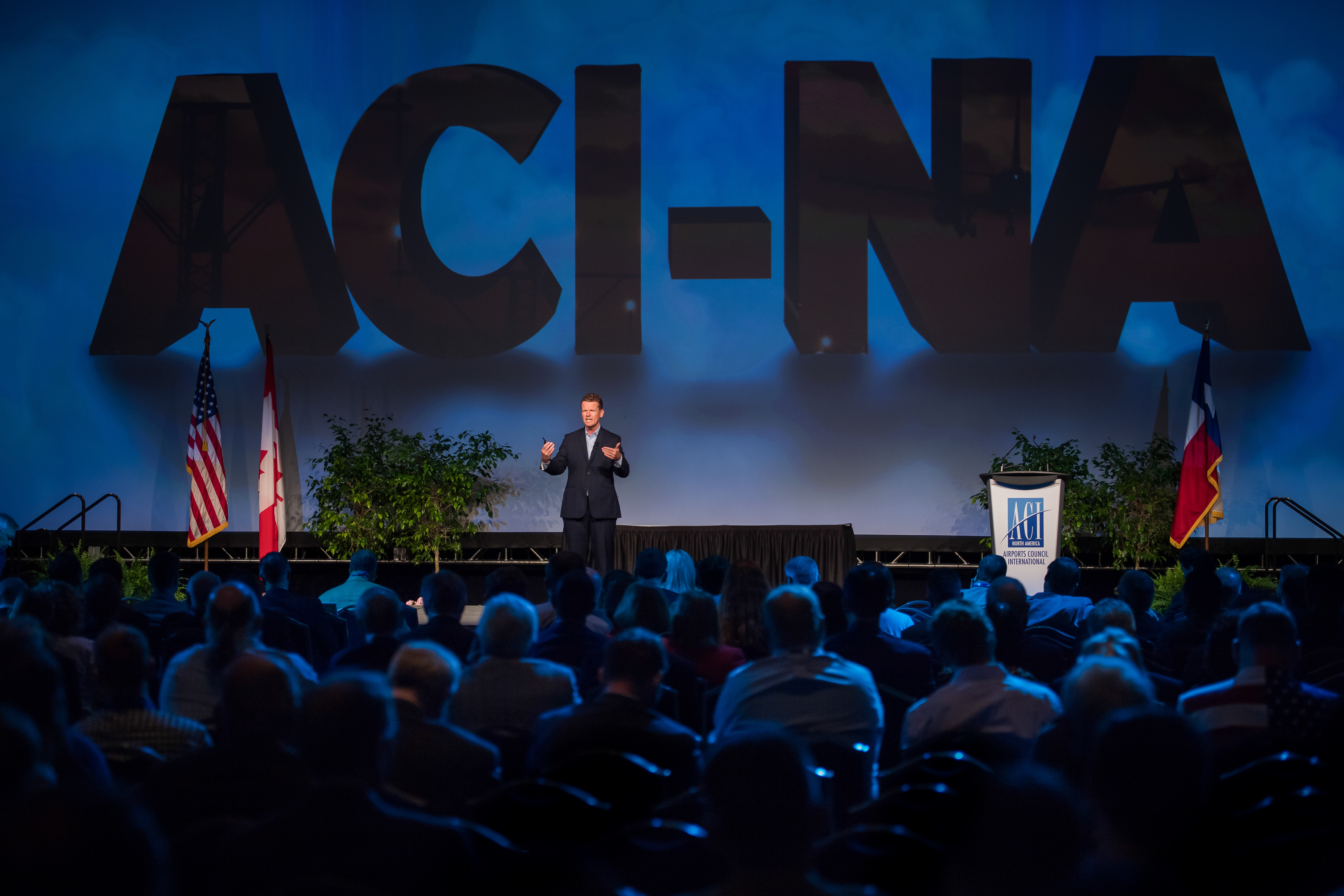
Crowd listening to a speaker at ACI-NA’s 2017 Annual Conference

Cheers to 70 Years: The Best Is Yet to Come

By: Kevin M. Burke, President and CEO, ACI-NA

2018 represents a great milestone for Airports Council International-North America as we celebrate our seventieth anniversary as the Voice of Airports in North America. Anniversaries like this provide a great opportunity to reflect on our past, celebrate our present and look ahead to the future.

As you know, air travel – and the world – has transformed immensely over the last seventy years. And our industry’s evolution along with it hasn’t always been easy or certain. That’s one of the chief reasons ACI-NA exists.

Then in a post-war world with a growing economy, air travel was increasingly accessible to the masses. As we entered the golden age of travel, airports faced many of the same challenges we see today, including burdensome government regulation, infrastructure and investment needs, and airline decision making.

Realizing that there was power in the collective, nineteen founding members convened in New York in 1948 to establish a body that would bring airports together in addressing the challenges and issues of an evolving aviation industry.  From there, our journey took off as the Airport Operators Council.

Looking back, this industry has overcome significant hardships and setbacks. From economic ebbs and flows to airline industry deregulation and airline consolidation to the September 11, 2001 attacks, this industry has always had to be nimble and responsive to the challenge of the day.

Your association has had to be nimble too. In the past seventy years, our name has changed from Airport Operators Council to Airport Operators Council International, and now to Airports Council International-North America in an effort to make room for our ever growing U.S. and Canadian membership and global connections.

While the issues of the past may sound familiar today, so much has changed. Today, airports operate more as businesses than they ever have before.  They are becoming cities unto themselves.

The current landscape presents many unique challenges that require solutions. Today’s airports are not your father or grandfather’s airport. We are seeing a change in the way technology affects air transportation across the world.

Meeting the demands of passenger and cargo growth has never been more important. Our airports must have the ability to modernize as they seek to accommodate rapid growth in passenger and cargo traffic. In the United States alone, airports need nearly $100 billion in infrastructure upgrades and maintenance in order to remain competitive with airports across the globe.

Solving today’s challenges are essential in order to lay the foundation for the future. As such, airports around the world are actively working to enhance competition, create efficiencies through technology, and improve the passenger experience.

There used to be more than thirty airlines that no longer exist because of airline consolidation. The future of the airport industry is at stake without an economic climate that fosters airline competition and choice.

Competition has many benefits in our industry, which can be enhanced through more air service routes and more airline choices. In order to ensure communities in North America remain connected to the global marketplace, we are actively working to make certain our industry – airports and airlines – are as competitive as they can be. Our work in this important area will only grow in the years ahead.

Technology will also be a large part of an overall improved and seamless passenger experience. Today, easiness is synonymous with technology. What new technologies can we use to our benefit? Biometrics is speeding up the boarding process for certain flights, and in a just a few years, all flights may be boarded with the scan of a face.

It’s clear that we must focus on enhancing the passenger experience for a successful future. But these challenges are too big for anyone to handle alone. And that’s where your association comes in.

Members always tell me the real value of ACI-NA comes through our ability to advance airport priorities in Washington and Ottawa, provide essential industry intelligence by keeping the pulse of the issues impacting airport operations, and foster industry collaboration by creating a forum to develop and exchange best practices.  The rich history of advocating for policies and services that strengthen airports will continue as we reflect on our accomplishments and look beyond the horizon.

ACI-NA is only as strong as its members and their active engagement. Our team is proud of the members we serve because of the profound and positive impact they have on local communities across North America. Thank you for your leadership.

Today, as we celebrate our seventieth year with a strong membership and transnational – even global with the establishment of ACI World in 1992 – reach, we recognize that there are obstacles still to overcome. We’re not done yet. We’re just getting started.

Here’s to the next seventy years.

Meet the Member: Rep. Jeff Denham

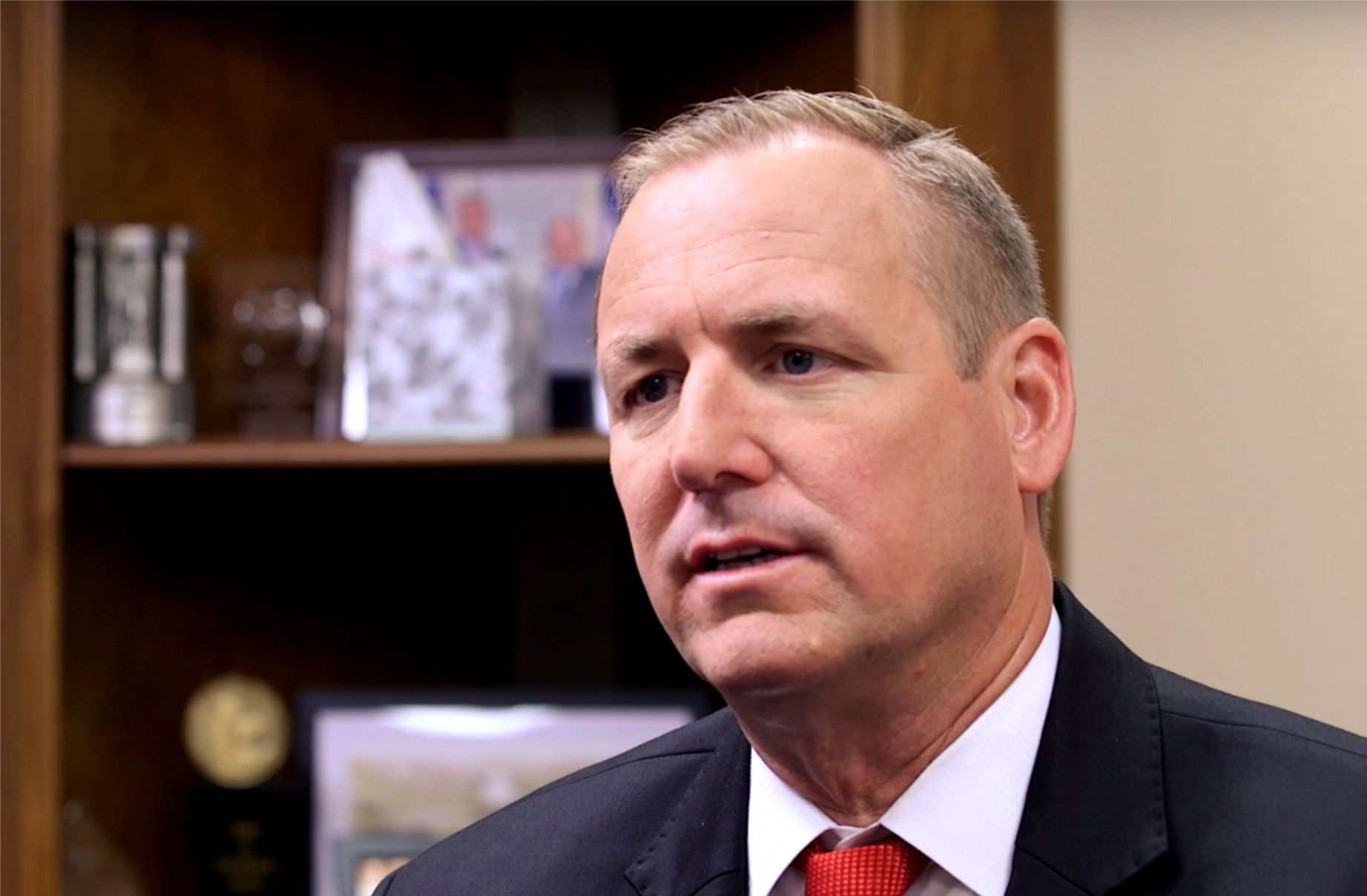
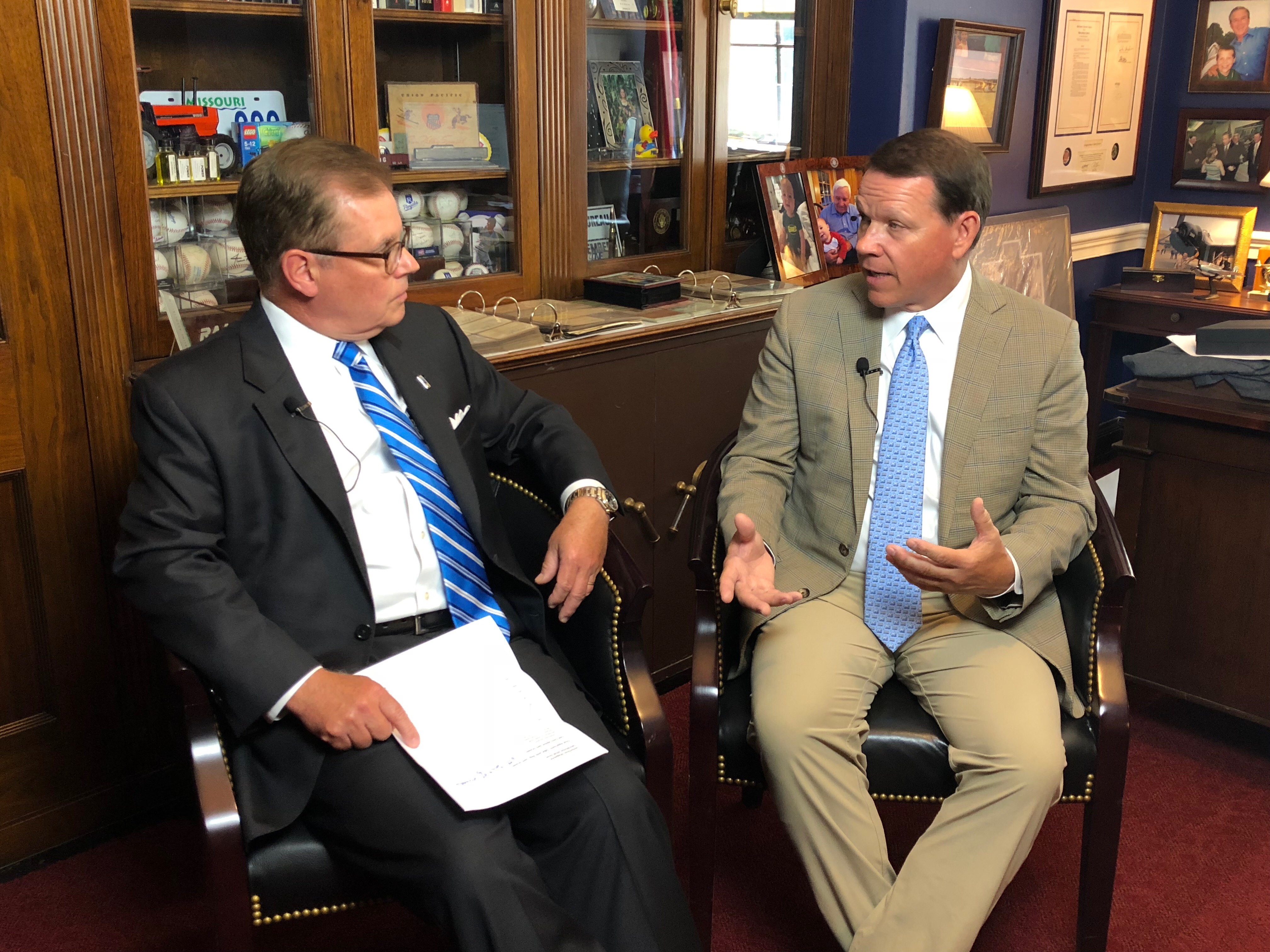
ACI-NA President and CEO Kevin M. Burke recently caught up with Rep. Jeff Denham, a member of the House Transportation and Infrastructure Committee, to talk about prospects for an infrastructure bill in Congress.

ACI-NA Celebrates 2018 Infrastructure Week at TPA

Infrastructure Week, a week-long celebration of the vast network that supports – and moves – the U.S. economy, is taking place this week. ACI-NA’s Airport Infrastructure Needs Study details that U.S. airports have nearly $100 billion in infrastructure needs through 2021 to accommodate growth in passenger and cargo activity, rehabilitate existing facilities and support aircraft innovation.

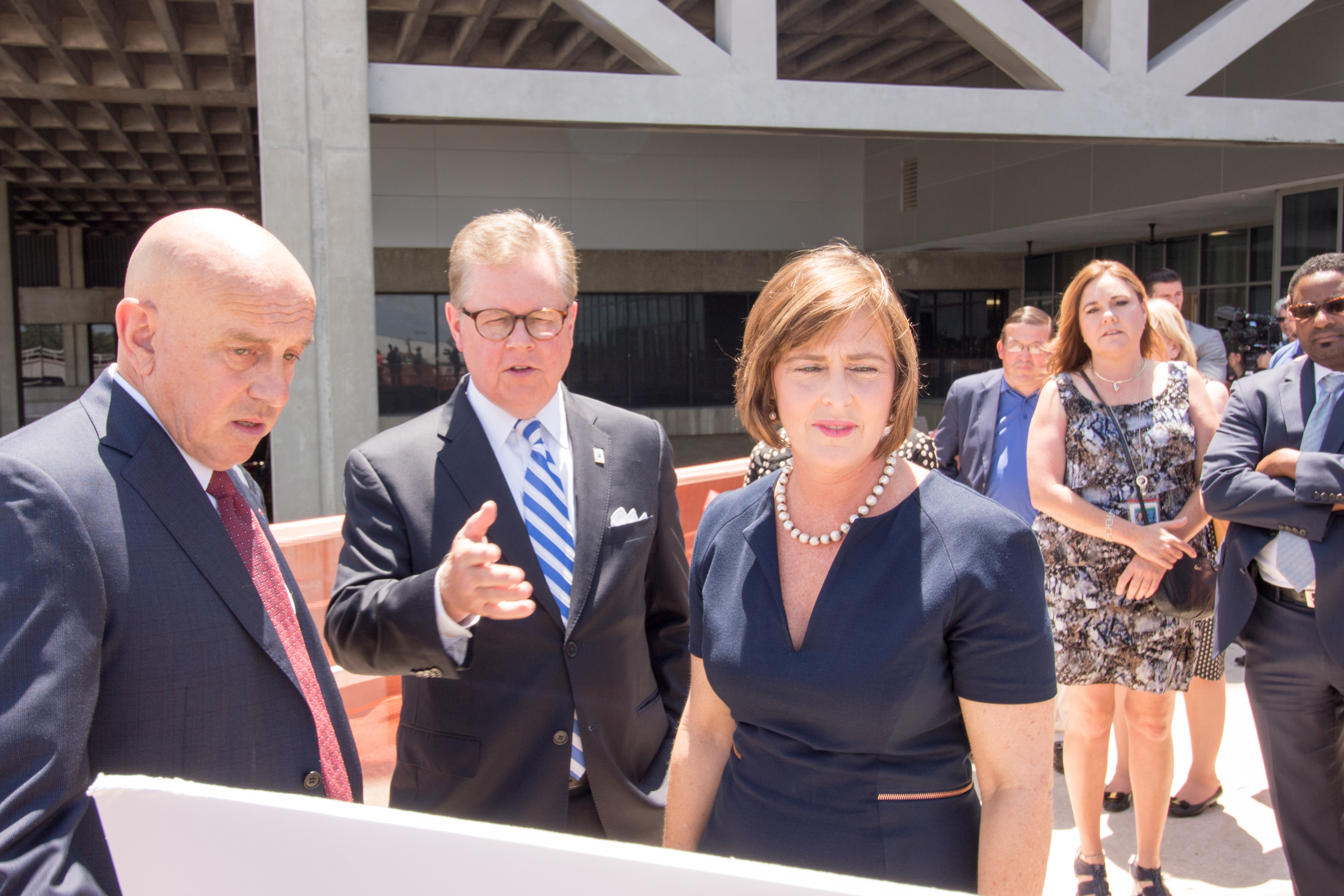
For Infrastructure Week 2018, Tampa International Airport hosted ACI-NA and Building America’s Future (BAF) along with members of the Tampa Congressional delegation for an event focused on the need for airport infrastructure investment. This video highlights the lawmakers and industry leaders who called for robust infrastructure investment during the event.

Global Trends in E-Commerce

By Ricondo & Associates Inc.

The increasing use of electronic commerce (e-commerce) has changed the landscape of global retailing and is affecting activity at airports. The development of e-commerce includes retailing in airport terminals, but is more significantly related to an airport’s interaction with the business, logistics, and cargo networks that can provide competitive advantages to companies in, for example, assembly, sortation, regulation, speed, assurance, and cost of delivery. The widely anticipated growth of e-commerce worldwide presents significant opportunities for airport owners to recognize trends, support the e-commerce business network to the benefit of their tenants and their own financial results, and contribute to regional economic development.

OVERLAYING DEVELOPMENTS

Several overlaying developments contribute to the growth of e-commerce:

  1. Increasing concentration of the world’s population in urban areas with global connectivity, which increases the importance of the world’s airports in moving passengers and goods around the world.
  2. Increasing self-owned, single-person businesses, also frequently referred to as the “gig economy” or “on demand economy.”
  3. Technological advancements to enable globalized commerce.

LEADING E-COMMERCE MARKETS

There are varying estimates of e-commerce sales by country, but, in most cases, China is shown as the leader because of its very large population base and rapid adoption of technology.

E-COMMERCE GROWTH IN UNITED STATES

The United States is the second largest online market in the world (following China). Many U.S. retailers are investing in international operations, and many international e-retailers are investing in the U.S. market.

Online sales still represent a relatively small share of total retail sales in the United States (about 8 percent in 2016), but the online share has been increasingly rapidly. This illustrates the potential for significant future growth in e-commerce in the context of the very large overall U.S. retail market.

LOGISTICS AND DELIVERY ARE KEY TO E-COMMERCE

E-commerce, in most cases, replaces the experience of shopping at a brick-and-mortar store, and requires the delivery of goods to the purchaser. According to the U.S. National Retail Federation, about 60 percent of online sales in 2015 included free shipping.

Free shipping is a competitive advantage, but also a cost. Combined with increased demand for speed of delivery (2-day, 1-day, or same-day), shipping to individuals is a major logistical challenge central to the business offering.

National postal services have become more relevant with the rise of e-commerce because of their networks of local couriers and ability to deliver to individual residences. Delivery is more complex with cross-border trade—myriad issues exist, such as multiple operators, customs clearance, customer payment, taxes, and currency exchange challenges.

One area of interest for e-commerce is the potential for drones to deliver packages, and thereby solve one of the more costly and complex elements of e-commerce fulfillment. The potential for drones is particularly important for airport owners to consider because, if there is an alternative delivery method, questions arise regarding investment in airport facilities for more traditional air cargo and the potential airport role in supporting the use of drones for e-commerce delivery.

OPPORTUNITIES FOR AIRPORTS

Airport owners have multiple opportunities to participate in the growing e-commerce business.

Strategies need to be developed in accordance with the local setting—geographic location, economic fundamentals, and airport infrastructure. With the continued globalization of economic activity, and the associated increase in cross-border e-commerce, airports with established international gateway operations and networks of logistics businesses familiar with the intricacies of international trade will be well-positioned.

The Miami-Dade Aviation Department, operator of a system of airports in Miami-Dade County, Florida, has invested in strategic planning to leverage the combined (1) rapid growth in e-commerce, and (2) Miami’s unique position as an international center of commerce and air cargo for Latin America. A multifaceted approach to analysis and planning includes evaluating cargo infrastructure needs and the potential use of various airports in the system, and coordinating with stakeholders on-airport and in the community.

Recently, the Miami-Dade Aviation Department conducted a workshop with airlines, integrators, logistics providers, community economic development leaders, and others to discuss challenges, opportunities, and collaboration strategies related to e-commerce.

Big Data: The Airport Cleaning Management Revolution

By Jimy Baynum

The idea of a “smart airport” may seem unobtainable. Occasionally, massive crowds, delays and various other touchpoints from check-in to the gate can affect airport visitors’ experiences and make it hard for them to imagine that they are in an intelligent environment. The problem lies in the fact that many airports, especially the nation’s largest airports, weren’t built to handle the current volume of traveler traffic, often exceeding their design limits by millions of travelers, according to Michael Taylor, director of J. D. Power’s airport practice.

Yet, airports have found ways to overcome infrastructure limits by working on the things they can influence. One way they have done so is by turning to a technology that is helping to create smarter, more efficient airports – the Internet of Things (IoT). But the value of IoT lies not in connectivity itself, but in the new information it can provide – and the actions you can take based on that information.

It’s no secret that data has the ability to transform a business and offer it greater opportunities for competitive advantage. It enables executives to measure results and performance and, therefore, manage more precisely than ever. It enables leaders to make better predictions and smarter decisions, as they can identify pain points and target more-effective interventions based on precise data, rather than gut and intuition. Companies that have transformed their business models to be data-driven have seen greater financial and operational success. In fact, companies in the top third of their industry that use data-driven decision-making were, on average, 5 percent more productive and 6 percent more profitable than their competitors. Airports have already applied IoT to improve check-in, security screening and the food, beverage and retail shopping experiences, so why not use it to improve cleaning operations?

Real-time data is a powerful change driver that enables better-informed and faster decision-making. When airport facility managers and their cleaning staff are empowered with real-time data about cleaning needs, the very logic for how cleaning can be done changes and operations are dramatically improved. It becomes possible to be proactive and do exactly what is needed when and where, and handling a complex facility like an airport is transformed into a fact-based science.

This is data-driven cleaning.

By knowing what issues need attention and where, staff’s time is not wasted on unnecessary work checking for issues, thereby improving overall efficiency. This time means cleaners can go the extra mile to ensure travelers have the best experience in an airport, with managers resting assured that

nothing has been neglected. This real-time information also provides airport decision-makers the ability to analyze the data over time to improve planning, purchasing and logistics.

Data-driven cleaning also enables higher quality facilities with no more empty bathroom dispensers and untidy gate waiting areas. By keeping airport facility managers well-informed of restroom or gate traffic, and alerting them exactly when and where issues arise, staff can proactively address a refill need for each restroom and dispenser. This ultimately helps reduce the number of complaints and creates a well-cared for environment that increases visitor satisfaction and cleaning staff productivity.

Leveraging data also reaffirms cleaning staff’s sense of purpose, helping to improve their engagement and well-being. Your people are your most important resource. Work feels meaningful when they know every task matters, as they know now that each stop they make makes a difference, meaning better control, less stress and a more balanced working situation.

While the cleaning industry has already seen a boom in technology, such as automated cleaning robots, in recent years, the latest shift toward data-driven cleaning is not about replacing humans with machines. Cleaning and facility management operations – particularly in airport facilities – are too complex and unpredictable for an automated machine to handle. This is why data driven cleaning becomes so important.

As MIT and Duke University researcher Mary Cummings writes, “As a team, the human and computer are far more powerful than either alone, especially under uncertainty.” <

Jimy Baynum is Director of Market Development, North America, Essity Professional Hygiene Business.

Ground Transportation’s New Normal

Airports Navigate the (R)Evolutionary Shift oF TNCs

By Nicole Nelson

Just beyond the busy holiday season, Eva Cheong recounted San Francisco International Airport’s particularly “rough Thanksgiving” in terms of bottlenecks in roadway congestion.

“When you would walk outside, every other car you would see had an Uber or a Lyft sticker on it,” SFO’s Associate Deputy Airport Director of Airport Services shared of the challenging day-to-day clogged curbside experience in late November 2017. “There are different camps, and the Transportation Network Companies are going to run into those because they are the newest player. But everybody looks to them to say, ‘It is all because of the TNCs.’”

Cheong is not pointing fingers, but readily admits TNCs have largely sparked a broader conversation about just how to reduce the overly crowded curbsides at SFO.

“TNCs have challenged us in terms of us trying to promote high occupancy vehicles and transit first because they’ve made it convenient and affordable for people to take a single vehicle to the airport.”

InterVISTAS Executive Vice President Peter Mandle said the TNC customer base at airports has expanded tremendously, not only in volume, but also with demographics in terms of age range and travel habits.

“As TNCs become more and more popular, the impacts of curbside congestion have become pronounced,” Mandle said. “People who used to use HOVs such as shared-ride vans or transit are now finding TNCs very attractive, and are using those to travel to and from the airport. And because they are transitioning from high occupancy vehicles to single-occupancy vehicles, they are adding to curbside congestion. That is a challenge at SFO, and it’s becoming a challenge at other airports over time.”

At Denver International Airport, Chief Commercial Officer Patrick Heck reports that explosive growth led to the establishment of an initial holding lot within the geofence when TNCs entered the market as a very small piece of ground transportation in 2014.

“The evolution was quick into a very similar story to taxis where we actually have a location where they wait to pick up passengers,” Heck said, noting that TNCs began to eclipse taxi usage in December 2015. “(TNCs) are now operating here and are actually a fairly sizable portion of the ground transportation we receive at the airport.”

After that space was quickly outgrown, the TNCs were moved to a larger location – a very big overflow parking lot – about six minutes away from the terminal.

Cross-country at Boston Logan International, CEO Tom Glynn is experiencing similar curbside concerns with daily passenger car traffic jumping from 9,000 drop offs pre-TNC, to the current tally of nearly 15,000 drop offs with the permitting of services including Uber and Lyft. But unlike Denver, Logan has few options in the way of infrastructural changes due to both the land and water constraints of the New England airport’s topography.

“We are on a postage stamp compared to other airports,” Glynn said, noting the very small footprint of only 1,700 usable acres. “We intend to add some parking spaces over time after a 28-year parking freeze. But in terms of TNCs and taxis, it is really reusing what we have and being creative.”

THE NEW NORM

From coast to coast and in between, the issue of curbside congestion is among a host of new realities that airports face when challenged with revolutionized technologies.

“We’ve addressed everything from the initial wayfinding and signage to what do you call them and how can you help passengers find them,” InterVISTAS Manager Stephanie Box said, noting a whole host of phrases that companies such as Lyft, Uber and Wingz use to describe their services, including ride sharing, ride pooling, ride sourcing and ride hailing. “Should pick-up and drop-off, for example, be in the same location? Obviously, the curbside is the most convenient, but then if it causes really bad congestion, you are impacting all of your other customers who are also trying to access the airport. So there is a trade off between balancing the operations and the customer experience for all passengers. Operationally the TNCs may not like having to be in the garage, and the customer has to walk across the street, but if traffic flow is improved then the wait time for all passengers ends up being lower.”

Beyond customer-centric themes, perhaps the airports’ most glaring issue pertains to money. While this evolution is merely in its infancy, TNCs and airports have already chartered a storied financial history.

Long before Uber and Lyft became household names, TNCs were making a big first impression on North American airports as the ground transportation realm became peppered with ride-sharing vehicles. This elicited a less than favorable response from airports as lost opportunity costs derived from fee-based traditional taxi and limo services were sorely missed and the less costly TNC vehicles stealthily captured the fares.

“The economics have changed as a result of TNCs disrupting the airport market because they offer, in a lot of places, cheaper fares for passengers,” observed LeighFisher Managing Director Jason Snowden, “and sometimes more convenient options than traditional forms of ground transportation.”

Popularity and politics persisted and the confluence of ever-increasing customer demand and lengthy negotiations has brought generalized acceptance and initial solutions to the more than 130 North American airports now offering TNC service.

Widespread use of geo-fencing within defined perimeters has enabled the delegation of fee payment to airports based upon TNC pick-ups and drop-offs and, in many cases, zones have been established for TNCs to share holding areas with other transportation operators.

COMPETITIVE TENSION

While these initial issues have been largely hashed out, tension remains as airports poise to approach the next iterations in the evolution of TNCs.

“Airports obviously have a lot of local demands – and sometimes even political pressure – that is placed on them from policy makers,” Snowden said, noting that certain states have limited the rights of airports in terms of how they can separate charges for ground transportation including taxis, TNCs and other providers. “And TNCs have been pretty aggressive in terms of lobbying state and local politicians to, in their words, ‘protect the public interest’ by providing access to less costly and more convenient forms of ground transportation. And the public definitely does like the service.”

But airports, obviously, have a requirement to be as self-sustaining as possible to fund future capital.

“Traditional revenue centers such as parking and rental cars have been impacted dramatically,” Snowden continued. “If those areas aren’t profitable then obviously an airport can’t continue to invest in future infrastructure and make improvements for the general traveling public. So there is a little bit of tension in the industry right now as a result of the competing interests. Airport operators are doing what they can to try to increase fees, but in many cases they have been stepping them up rather gradually in comparison to the actual impact that TNCs have had in their market.”

THE ‘MILLION DOLLAR QUESTION’

SFO was among the first in North America to permit the locally based TNCs into their ground transportation marketplace where Cheong said Silicon Valley’s Uber, Lyft and Wingz have been experiencing explosive growth since Fall 2014.

“(TNCs) have pretty much taken over the bulk of our commercial ground transportation,” Cheong said, noting that the ride hailing services now constitute the largest group of commercial operators at SFO and are expected to soon take over private vehicles. “They have impacted just about everything. You can’t say they just took taxi customers or share-ride van customers. They took parking customers, too.”

Cheong explained that in some respects, revenues have increased when fares have been generated in lieu of a private transfer. Passengers who may have previously opted to take a private car to the airport, or had a family friend or someone drop them off are now generating a trip fee with TNCs. Alternatively, Cheong said SFO is starting to see the first signs of reduced parking entries and exits, too.

“I think there’s going to be a lot of talk,” Cheong said, calling this quandary the ‘million dollar question going forward’. “The new hubbub is how TNCs are impacting airport revenue streams, especially in the parking and rental car sections. Everybody is going to try to figure out ways to recover from that.”

Denver’s Heck said that despite passenger growth, parking revenues have stagnated around $170 million over the course of the past three years.

“Even after traffic has grown in high single digits, parking has remained flat,” Heck said, “So what that tells you is that the yield with the dollars per passenger are starting to come down from parking… You can’t 100 percent blame that on TNCs, but I think that is a big part of it.”

Cheong and Heck are among airport personnel working projections and starting to have conversations about how to offset such notable reductions. “Several airports are now looking at alternative fees, alternative business arrangements, and other methods or other revenue models in order to make sure they maintain their non-airline revenues,” InterVISTAS’ Mandle said, noting the importance of maintaining the airport infrastructure, supporting capital investments and providing an optimal customer experience. “I would say everything is on the table as we are at that infancy right at the initial stages in terms of what airports are doing.

They are exploring all sorts of options.”

According to LeighFisher’s Snowden, underlying business models and fee structures need to be revisited.

As he explains, a number of airports applied similar rates that taxis and limos had been assigned to the TNCs without considering the potential impact of TNCs.

“A couple of years ago, airports would have just used their normal ground transportation rates and fees and applied them to TNCs when TNCs entered the market,” Snowden explained of the reactionary measure to the initial disruption of the market.

“At the time, a lot of airports hadn’t really done a full cost recovery or ground transportation rate settings study to evaluate what the rates should be in light of TNC impacts.”

FUTURE IMPACTS

As airport rideshare usage continues its upward trajectory, the initial impacts of the TNC evolution are noticeable – by airports, by businesses and by individuals. “TNCs give passengers a lot of choices they didn’t have in the past,” explained Snowden.

For airports, more research is being done on the financial side, especially the rates for parking, rental cars and other forms of ground transportation that have been impacted by TNCs. “A few years ago, the median pick-up/drop-off fee for airport access would have been in the $2 to $3 range at large hub airports,” Snowden said. “Today, the median is in the $4 to $5 range and we expect it to continue increasing as airports reevaluate their business model and fee structures in light of TNC impacts.”

SFO’s Cheong said San Francisco has had a good track record in terms of rising concessions and ground transportation revenues while keeping the rate basis for the carriers down. But the airport is seeking innovative and fair ways to charge new entrants for access to the airport.

“I think we all just have to understand that this is more of a revolution,” SFO’s Cheong said, citing the constant need for airports to adapt and change. “With the TNCs themselves, it helped us to understand what their business model was and how they could fit in to how we do business here. But I think in the future, airports are going to have to look toward restructuring how we are doing our finances and our revenue generation if we expect to continue the way we have been.” “ACI-NA is helping to facilitate those conversations”, said Aneil Patel, ACI-NA’s Senior Director of Air Policy.

“Our Operations and Related Airport Revenues Working Group helps member airports exchange new information and ideas to address the evolving TNC challenge.”

IDENT

The CBP has determined that facial recognition biometric exit technology is a viable solution to managing the entrance and exit of travelers coming through U.S. airports. The technology is provided by the Department of Homeland Security through its office of Biometric Identity Management (OBIM). The system, dubbed IDENT, currently processes some 300,000 biometric transactions each day. The pilot programs launched at some airports over the past year will allow the CBP to determine how well it works with various flights, airports, lighting conditions and internal IT configurations and whether it is flexible, reliable and easy for travelers to use.

Chicago O’Hare International Airport

The technology is being used for unspecified select flights from Chicago since July 2017.

George Bush Intercontinental Airport

Testing on facial recognition technology started in June 2017 on a single daily flight between the United States and Tokyo.

Hartfield-Jackson Atlanta International Airport

Initial airport testing of facial biometrics began in Atlanta in June 2016 to determine how well the technology would work with existing IT systems.

William P. Hobby Airport

The technology was unveiled in August 2017 for use on select flights from the airport.

John F. Kennedy International Airport

A 30-day testing program began in October 2017 using the technology at an unspecified TSA security checkpoint.

Los Angeles World Airports

Three self-service biometric boarding gates use facial recognition technology to get passengers on board international British Airways flights at LAX.

McCarran International Airport

The technology was deployed in August 2017 for a single daily flight from the US to Guadalajara, Mex.

Miami International Airport

The technology started being tested on an unspecified flight from Miami in October 2017.

Washington Dulles International Airport

In June 2017, the airport introduced facial recognition biometric exit technology for a daily flight from the United States to Dubai.

IATA Eyes a Future with One ID

Imagine a day when a passenger could present a single form of ID that would ensure a smooth path through the airport at the very start of his or her journey through the boarding process.

That’s exactly what International Air Transport Association (IATA) has in mind with its concept, ONE ID that would enable a secure, seamless and “frictionless” process allowing them to walk through the airport “without breaking stride.”

IATA confirmed through its 2017 Global Passenger survey that passengers want more automation of airport processes. They would like a single identity token that would be used through all processes, real time information sent to the personal devices and more efficient security without removing or unpacking personal items. Some 82 percent said they would like to be able to use a digital passport on their smart phones for as many travel activities as possible. To meet such a goal, there will have to be close collaboration between various industry and government stakeholders for a solution that applies horizontally across the end to end passenger experience, according to IATA’s Guido Peetermans, Head of Passenger Security. “All stakeholders will benefit from a coordinated approach through improved productivity, increased capacity and cost savings as well as improvements in border, aviation and airport infrastructure security.”

Peetersmans noted that ONE ID does not favor one particular form of biometrics. “While facial recognition may be the most pragmatic choice in many environments, other jurisdictions or stakeholders may prefer other biometrics such as fingerprint or iris for technical, operational or cultural reasons.”

A major barrier to implementing a collaborative identity management solution is to establish trust and collaboration between stakeholders, Peetermans said. “Today, individual stakeholders take steps to ensure their own obligations are met, but with little or no coordination between them. We will need to break these silos and get stakeholders to collaborate towards a solution that would apply horizontally across the whole process.”

Peetermans said that an upfront investment in the new technology required for biometric recognition is required but it is increasingly mature and moving forward at a rapid pace.

“We don’t believe that the installation and integration of the technology components are going to be the bottleneck as is evidenced by various pilot projects that are underway at leading airports around the globe.”