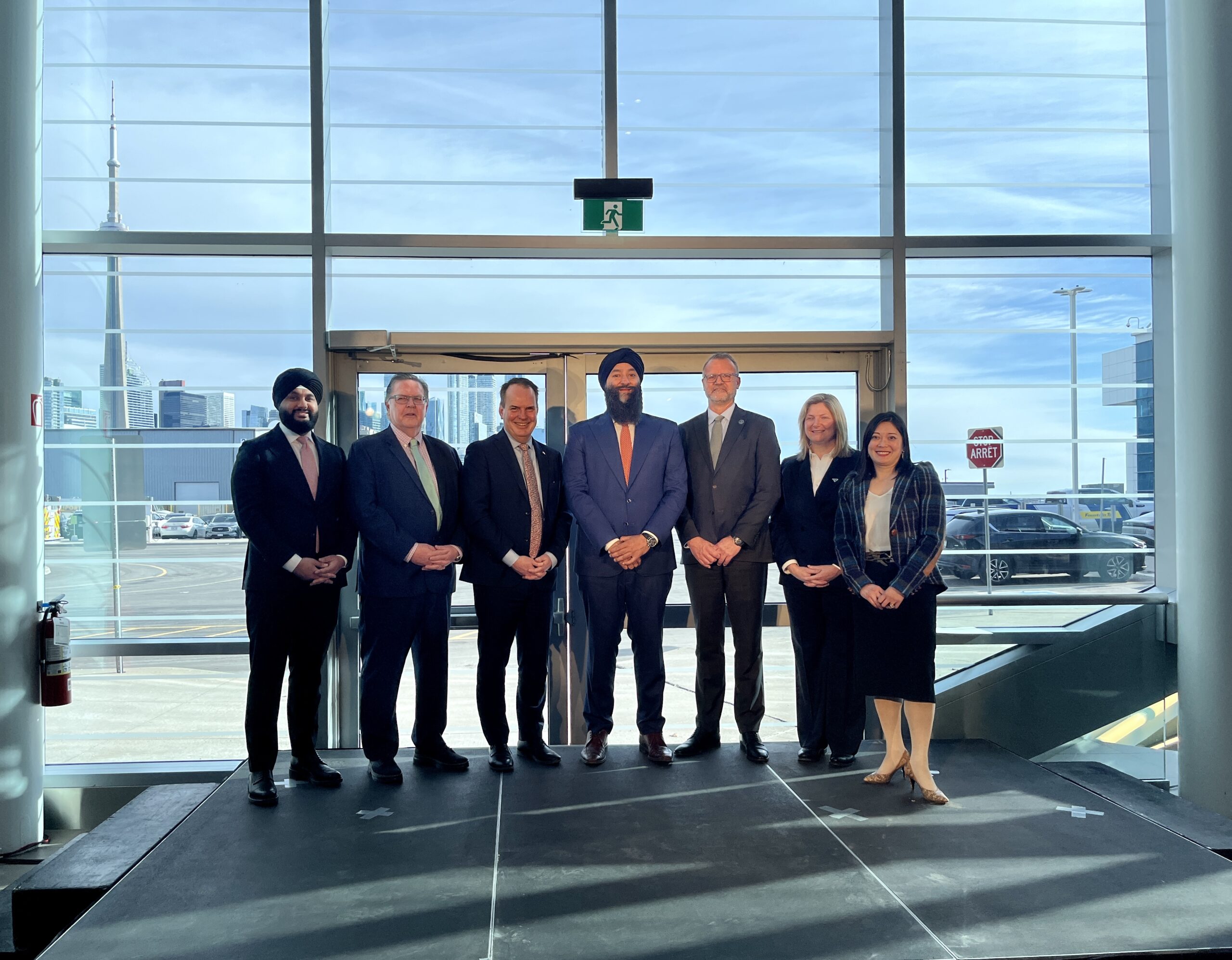
A major milestone for cross-border air travel in North America took flight this week as Billy Bishop Toronto City Airport officially opened its U.S. Customs and Border Protection Preclearance facility, enabling travelers to complete U.S. customs and immigration procedures before departing Canada.
The launch marks a transformative moment for Toronto’s downtown airport by streamlining travel to the United States, opening the door to new transborder routes, and strengthening economic ties between Canada and the U.S.
For passengers, the experience will feel familiar to travelers departing from other major Canadian hubs: they clear U.S. customs prior to boarding, arrive in the United States as domestic passengers, and bypass customs lines upon landing.

A Decade in the Making
The new facility brings U.S. Customs and Border Protection preclearance operations to Billy Bishop for the first time, the culmination of more than a decade of planning and collaboration between the U.S. and Canadian governments, the Toronto Port Authority, and terminal partner Nieuport Aviation.
“Today marks a defining milestone for Billy Bishop Toronto City Airport and for the passengers and markets we proudly serve,” said RJ Steenstra, President and CEO of the Toronto Port Authority, the owner and operator of Billy Bishop Toronto City Airport.
“For nearly 90 years, this airport has linked Toronto and the region to tourism, trade and business, earning recognition as one of North America’s best airports. With the opening of the U.S. Preclearance facility, we will further enhance convenience, strengthen security and create new opportunities for connection,” Steenstra said.
With the facility now operational, travelers bound for the United States will complete customs, immigration, and agriculture inspections in Canada before takeoff, eliminating the need to clear U.S. customs upon arrival.
Preclearance is already a hallmark of several major Canadian airports, but its introduction at Billy Bishop is particularly significant given the airport’s downtown location and business-traveler focus.

Opening the Door to New U.S. Routes
Beyond convenience, the new facility unlocks expanded connectivity.
Airlines have long required preclearance infrastructure to launch many U.S. routes from Canada. With the facility now operational, both Air Canada and Porter Airlines have already signaled plans to expand transborder service from the airport.
Airport leaders say the change will help position Billy Bishop as an even stronger gateway between Toronto’s downtown core and major American markets.
Jennifer Quinn, CEO of Nieuport Aviation, Billy Bishop’s terminal partner, described the development as “far more than a process upgrade.”
“By clearing U.S. Customs in Canada, we’re making travel to the U.S. more convenient, unlocking new routes, facilitating more connections to and from Toronto and growing the economy through visitor spend and job creation,” Quinn said.
Economic Impact for the Toronto Region
Local business and economic leaders also emphasized the broader economic implications.
According to the Toronto Region Board of Trade, improved cross-border access will strengthen the region’s ability to connect with U.S. partners, clients, and investors, an important factor in regional competitiveness.
Tourism leaders echoed that sentiment. The United States remains Toronto’s largest international visitor market, generating $1.6 billion in visitor spending in 2025, according to Destination Toronto.
With faster and more seamless travel between downtown Toronto and key U.S. cities, officials expect the new facility to help drive both business travel and leisure tourism.
The project was supported by a $30 million investment from the Government of Canada and required extensive collaboration among the U.S. Department of Homeland Security, CBP, airport authorities, airlines, and regional stakeholders.
Why It Matters for Airports
Preclearance programs have become a powerful tool for airports seeking to expand transborder service while improving the passenger experience.
By moving the inspection process upstream, airports can:
- Reduce arrival congestion at U.S. airports
- Improve reliability and passenger flow
- Enable service to U.S. airports without customs facilities
- Strengthen cross-border economic connectivity
Industry observers note that successful projects like Billy Bishop’s can serve as a model for future international aviation partnerships.
Dr. Laura Dawson of the Canada‑US Future Borders Coalition called the facility “an innovative model of passenger preclearance that will become the gold standard for sites in Canada, the United States, and around the world.”
A New Chapter for Toronto’s Downtown Airport
For nearly 90 years, Billy Bishop Toronto City Airport has connected Toronto’s downtown core with destinations across Canada and the United States.
With the launch of U.S. preclearance, airport leaders say the facility will now help usher in a new chapter, one defined by greater convenience, expanded connectivity, and stronger economic impact for the region.
As cross-border travel continues to rebound and demand grows, the new facility positions the airport to play an even larger role in the North American aviation network.