
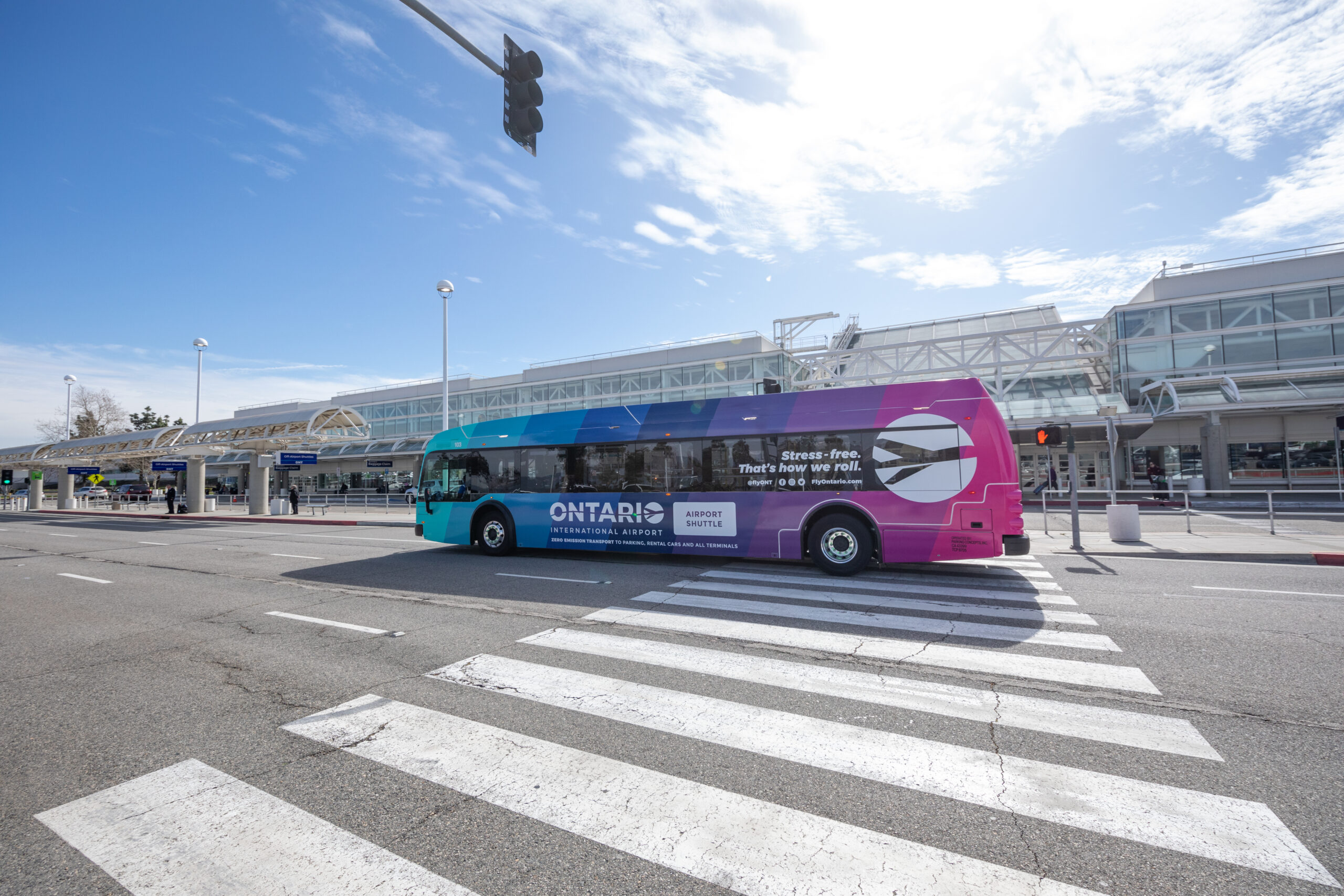
For millions of travelers, the airport journey begins long before they reach the terminal curb. It starts on highways, access roads, parking decks, and increasingly on buses and trains designed to reduce congestion and make travel easier. But a new report released today by the Government Accountability Office (GAO) suggests that while public transit access to U.S. airports is more common than many travelers realize, convincing people to actually use it remains a challenge.
In its analysis, Accessing Airports: Available Public Transit Options and Efforts to Promote Their Use (GAO-26-107817), which was required under the FAA Reauthorization Act of 2024, GAO examined how travelers and airport workers get to and from 51 U.S. commercial service airports, including all large hub airports and a sample of small and medium hub airports. The findings paint a nuanced picture: public transit connections are widespread, particularly at large airports, but private vehicles still dominate the way most people access the airport.
According to GAO, nearly every major U.S. airport offers some form of public transportation. Rail service is especially prevalent at large hubs, where metro, light rail, or commuter rail systems often connect terminals directly to downtown areas or regional networks. Medium and small airports are more likely to be served by bus service, linking terminals to nearby cities or transit centers.
Yet availability does not automatically translate into use. GAO found that transit ridership among passengers and airport employees varies widely but remains relatively low. Travelers frequently cite convenience, travel time, cost, and the ease of navigating luggage as key factors when deciding whether to take transit or drive. For many passengers, especially those traveling in groups or on tight schedules, personal vehicles and rideshare services still feel like the simplest option.
These choices have real consequences. As passenger volumes continue to grow, access roads and curbfronts at many airports are under increased pressure. Congestion during peak travel periods can ripple through entire regions, affecting not only travelers but also airport operations and surrounding communities. GAO’s report highlights how greater use of transit could help ease that strain, reduce vehicle emissions, and improve overall passenger flow.
The report notes that many airports are experimenting with new ways to encourage transit use, including clearer wayfinding, real-time transit information, partnerships with local transit agencies, and targeted marketing campaigns aimed at both travelers and airport employees. Some airports have introduced dedicated airport-branded bus routes or improved connections between rail stations and terminals to make transit options more visible and intuitive.
The report stops short of prescribing one-size-fits-all solutions, acknowledging that geography, regional transit funding, and passenger demographics all shape what works at a given airport. Still, the takeaway is clear: while transit connections are already in place at most U.S. airports, unlocking their full potential will require continued coordination, investment, and passenger communication.
Why This Matters to the Airport Industry
How passengers and airport workers reach the airport is no longer an ancillary issue. It is a core operational, economic, and customer experience challenge. As congestion on access roads grows and traveler expectations evolve, ground transportation has become inseparable from an airport’s operational efficiency.
The upcoming surface transportation reauthorization in Congress this year is critical for airports to underscore these needs. ACI-NA has advocated for the bipartisan Don’t Miss Your Flight Act (S. 1966 and H.R. 3754), for airports to have dedicated funding streams for critical ground access improvements, upon which both transit and vehicular traffic rely. ACI-NA’s 2025 Infrastructure Needs Study shows airports need more than $19 billion through 2029 for ground access projects.
The GAO study provides fresh information on why airport funding needs must be prioritized as part of surface transportation reauthorization and beyond. The airport industry’s advocacy will help ensure a more seamless journey for air travelers and airport workers for years to come.
Photo courtesy of the Ontario International Airport.